ATA Magazine
Women Lead for Learning
Why gender balance in educational leadership matters
Since its founding in 1945, the United Nations has worked to promote security, cooperation and human development across the globe. One of the UN’s important contributions is the 2015 adoption of 17 sustainable development goals (SDGs), which set out a universal framework for peace and prosperity. Each year, progress toward these goals is documented through a series of reports. Among them is Women Lead for Learning, a 2025 publication of UNESCO’s Global Education Monitoring series, funded by a group of governments, multilateral agencies and private foundations, including the Government of Canada. The report focuses on SDG 4—Quality Education—and highlights a striking reality: although women make up the majority of the world’s teachers, they remain significantly underrepresented in educational leadership.
The report opens with an arresting statistic. Globally, there is a 20-percentage-point gender gap in school leadership positions (UNESCO 2025, 5). This gap persists across diverse contexts, from low-income nations to the world’s wealthiest education systems, and remains true even in countries where girls’ access to education has improved. The findings underscore a critical point: gender parity in classrooms does not automatically translate to gender parity in leadership.
Uneven global patterns
The broader educational landscape helps explain these disparities. While boys and girls now enrol in primary education at similar rates worldwide, regional trends differ. In eastern and southeastern Asia, Europe and North America, more boys than girls are out of school, signalling a shift in long-standing patterns of gender disadvantage. In contrast, in northern Africa, western Asia, Oceania and sub-Saharan Africa, girls are more likely to be excluded from schooling, though their participation is improving steadily. Tertiary education presents its own contradictions. Enrolment is rising across the globe, yet in low-income countries, young women remain significantly underrepresented, with only 77 women enrolled for every 100 men. In high-income countries, the trend reverses, with women outnumbering men in university participation, even as men continue to dominate vocational training pathways.
These differences shape how young people see themselves and what futures they imagine. As the report notes, gender disparities in education extend into “how boys and girls learn and imagine their futures” (UNESCO 2025, 18). Because leadership pipelines emerge from educational and occupational pathways, early patterns of participation can have long-term consequences for who goes on to lead schools, systems and ministries.
Barriers that begin early
A central message of Women Lead for Learning is that gender gaps in leadership rarely stem from a single cause. Instead, they reflect a web of social norms, organizational practices and life circumstances that accumulate over time. Research shows that children internalize gendered expectations at a very young age. As early as six, they begin associating leadership with traits typically coded as masculine, such as assertiveness or strategic decisiveness. These implicit assumptions shape how individuals view themselves, how others perceive their potential and how leadership qualities are evaluated in professional settings.
UNESCO’s analysis echoes the work of Alice Eagly and Linda Carli (2007), who argue that women face a “labyrinth” rather than a single barrier. Despite being as ambitious as their male peers, women are less likely to be encouraged into leadership roles, more likely to be evaluated harshly for displaying assertive leadership behaviours and more likely to take on significant caregiving responsibilities outside of work. These factors not only delay women’s entry into leadership roles but also shorten the time they have to ascend to more senior levels. According to the report, “empirical evidence consistently shows that women enter education leadership roles later than men,” which results in fewer opportunities to advance to system-level leadership before retirement (UNESCO 2025, 43).
Why women’s leadership matters
Beyond the clear issue of fairness, the report outlines compelling reasons to diversify leadership. When women are visible in leadership roles, it challenges entrenched assumptions about who leads and why. Girls see possibilities they may not have imagined, and boys witness models of leadership that expand their understanding of authority and competence.
Moreover, women’s leadership contributes substantively to how education systems function. Research cited in the report highlights that women leaders often prioritize instruction, professional collaboration, curriculum development and the cultivation of positive school cultures. At the system level, women in senior roles have been “found to influence national reforms, including funding decisions, teacher recruitment strategies, inclusive policy development, and child-friendly disciplinary practices” (UNESCO 2025, 35). In other words, increasing the representation of women in leadership strengthens not only equity but also the quality and responsiveness of education systems themselves.
Building a more equitable future
To address these systemic challenges, UNESCO recommends a trio of solutions that are interconnected and should be implemented concurrently. First, education systems need better data. Without knowing where women fall off the leadership ladder, policymakers cannot target their efforts effectively. The “broken rung” phenomenon—the point early in a career where women are disproportionately excluded from advancement—must be identified before it can be addressed.
Second, systems must actively remove structural barriers. This includes improving recruitment and promotion practices, offering gender-bias training for hiring panels, and setting goals or targets to ensure women are considered equitably for leadership roles. Culture change is essential: women need to work in environments that not only welcome their contributions but also recognize their leadership potential.
Finally, women must be supported throughout their leadership journeys. Mentorship, coaching, peer networks and leadership development programs all contribute to a robust pipeline of future leaders. Providing these supports early and consistently increases the likelihood that women will pursue and succeed in leadership pathways.
References
Eagly, A. H., and L. L. Carli. 2007. “Women and the Labyrinth of Leadership.” Harvard Business Review 85(9): 63–71.
UNESCO. 2025. Global Education Monitoring Report: Gender Report—Women Lead for Learning.
United Nations. 2015. Transforming Our World: The 2030 Agenda for Sustainable Development. https://sdgs.un.org/2030agenda.
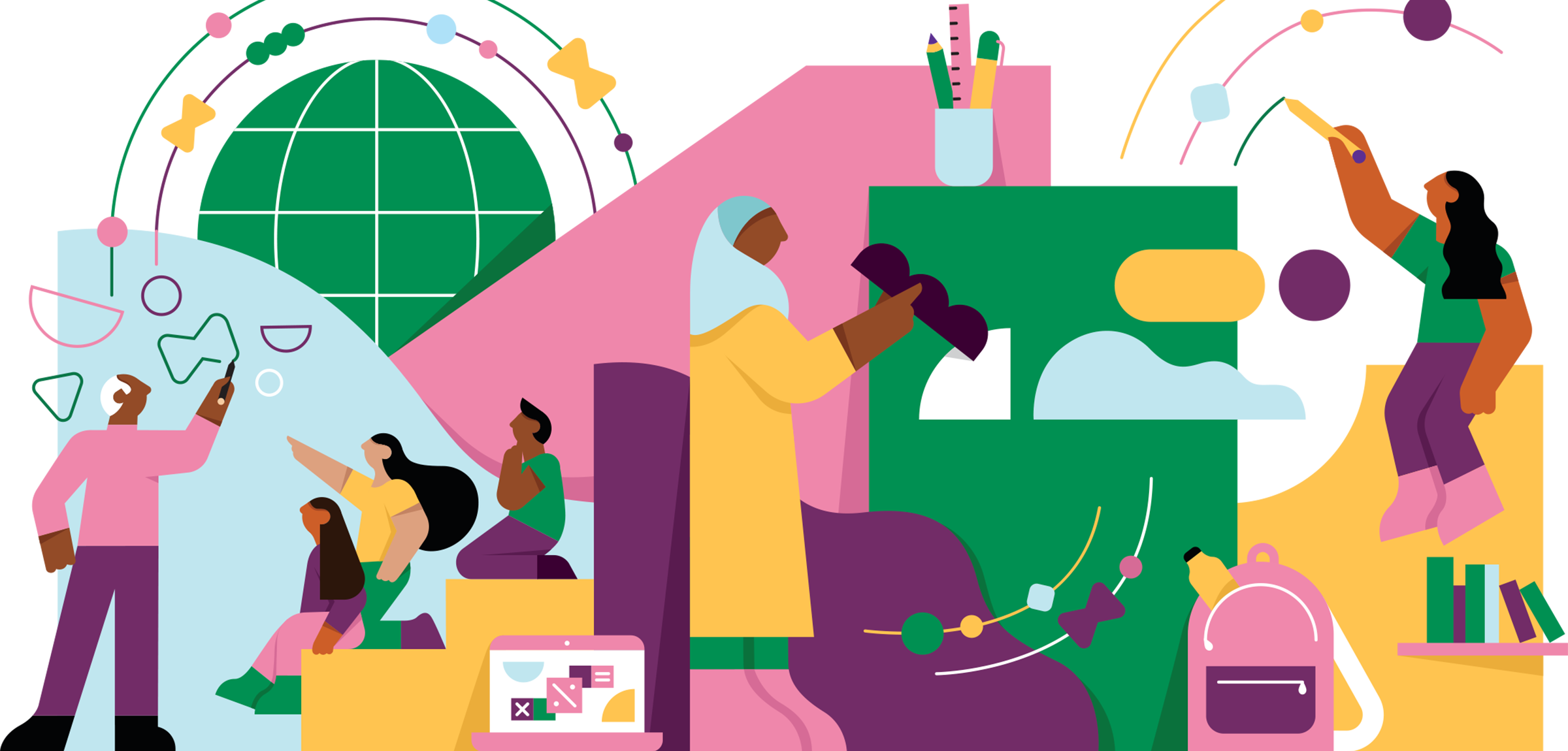
ILLUSTRATION BY MATEUSZ NAPIERALSKI