ATA Magazine
CLEAR Thinking
A framework for AI use

This article draws on a workshop available for teachers and school divisions on evaluating AI tools with the CLEAR framework. For more information, contact the author at ssabbagh@ucalgary.ca.
"By thinking through CLEAR, educators can cut through the hype, spot the risks and make sure AI enhances learning instead of undermining it."
Artificial intelligence is arriving in K–12 classrooms faster than most of us expected. Some tools promise efficiency, others creativity, but the question for teachers is always the same: Does this tool actually support my students’ learning?
The CLEAR framework offers five principles to help teachers pause and reflect before adopting any AI tool: context, literacy, equity, agency and responsibility. It isn’t a checklist for compliance; it’s a set of guiding questions. By thinking through CLEAR, educators can cut through the hype, spot the risks and make sure AI enhances learning instead of undermining it.
Using the CLEAR Framework
Context
AI tools don’t land in a vacuum. They enter classrooms shaped by curriculum, developmental stages and community values. What feels like innovation in a Grade 11 history course could feel overwhelming in Grade 3 math. Ask: Does this tool truly fit the subject I teach, the learners in front of me and the outcomes I’m responsible for? Or am I bending my teaching to fit the tool? When context is ignored, AI can distract rather than enhance learning.
Literacy
AI literacy is not about clever prompting; it’s about critical use. Students need to know how AI works, when to lean on it and when to set it aside. Teachers, too, need that literacy to guide safe, thoughtful use. Ask: Does this tool help me and my students understand bias, limits and blind spots? Does it give opportunities to critique outputs and test alternatives? Without literacy, tools become shortcuts. With literacy, they become a way to teach discernment.
Equity
Equity is not only about who can access AI but also about who can use it well. A tool might be available to all students yet still create divides if only some know how to turn outputs into deeper learning. Ask: Does this tool give every student, not just the most digitally fluent, the chance to use AI to think critically, ask better questions and refine their own reasoning? If equity isn’t built in, innovation risks becoming exclusion.
Agency
AI can either silence student voices or amplify them. If assignments stop at “what the AI said,” students’ reasoning disappears. But if tasks require them to critique, adapt and justify AI outputs, agency is protected. Ask: If students use this tool, what part of the work still belongs uniquely to them? How do I design assignments so they must make choices, explain decisions and defend their learning? Agency doesn’t happen by accident. It must be designed into every task.
Responsibility
When teachers bring AI into the classroom, we also bring responsibility. Students learn how to use these tools by watching us. If we model attribution, transparency and reflection, they will too. Ask: Does this tool let me model ethical practice, not just efficient practice? Does it open space for conversations about honesty, accountability and long-term consequences? Responsibility is not an afterthought; it’s the anchor that keeps innovation tied to integrity.
Final thoughts
CLEAR is meant to be a way to slow down and ask important questions about AI use. By reflecting on context, literacy, equity, agency and responsibility, teachers can better decide which AI tools belong in their classrooms, how to use them and why. When we do that, we ensure AI serves student learning rather than the other way around.
Recommended resource
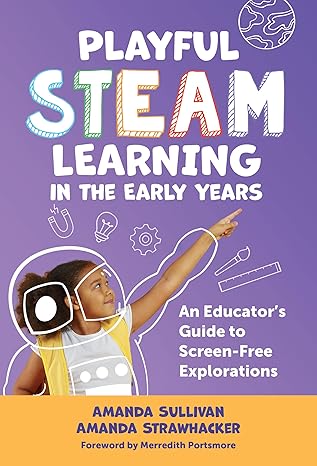
Playful STEAM Learning in the Early Years: An Educator's Guide to Screen-Free Explorations
Amanda Sullivan and Amanda Strawhacker
Available through the ATA library.
Four tips for managing email overload
- Turn alerts off.
- Create blocks of email free time during the day.
- Focus on key emails; file or delete as much as possible.
- Develop a strategy for saying no.
Source: Timothy Caulfield. 2022. Relax. A Guide to Everyday Health Decisions With More Facts and Less Worry. Penguin Random House.