
ATA Magazine
Teaching writing in the age of AI
Research insights

Strategies for educators
By reimagining writing assignments with AI, we hope to inspire thoughtful and equitable uses of this technology that empower students as writers.
Generative artificial intelligence (AI) is revolutionizing how people write and communicate. Many educators, however, are unsure what role this technology should play in their teaching due to concerns ranging from ethics to AI’s impact on student creativity. But rather than avoid AI or simply react to its presence, educators have an opportunity to design their instruction intentionally to align with their teaching goals.
We offer a practical guide for educators to design how and when to incorporate AI into writing assignments. Our framework highlights five key pedagogical purposes—assistive, resistive, creative, rhetorical and critical—and provides a roadmap for intentional AI integration in the classroom. By reimagining writing assignments with AI, we hope to inspire thoughtful and equitable uses of this technology that empower students as writers.
The challenge of AI in writing education
As AI reshapes everyday writing practices, educators are left navigating a continually evolving landscape. Many teachers worry that students are using AI without guidance, potentially crossing ethical lines or undermining their own voice. At the same time, there is a growing interest in how AI can assist with lesson planning, feedback and personalized instruction.
But what’s missing? While there is a wealth of resources for using AI for administrative tasks, such as creating rubrics or scaffolding lessons, there is little guidance on how to craft writing assignments that explicitly consider AI. Many educators have also expressed concerns about AI’s potential to erode originality and diminish student engagement. As we explored these concerns, we recognized a need for a clearer, more systematic approach to integrating AI into writing assignments.
In our work with teachers, we found that they were looking for a concrete guide that would help them understand when and how to use AI without compromising their values or pedagogical goals.
Our framework for designing writing assignments with AI
Through our ongoing collaboration with educators, we identified five key ways to approach AI when creating writing assignments: assistive, resistive, creative, rhetorical and critical.
Assistive: How AI can assist in writing
Assistive use of AI involves identifying specific ways that assignments can incorporate AI to assist students in the writing process, whether that’s through grammar checks, idea generation or real-time feedback. The goal is to help students learn when to use AI strategically to refine their thinking and improve their writing—and when not to use it.
It’s worth remembering that AI’s assistive role extends far beyond simple grammar correction.
Contemporary writing platforms now integrate machine learning to suggest sentence revisions, flag stylistic inconsistencies and even model alternative phrasing based on tone or audience. Used thoughtfully, these tools can make the drafting process more dialogic—helping writers notice patterns in their prose; clarify intent; and refine expression through continuous, adaptive feedback.
A teacher can design a writing assignment to tap into the assistive dimensions of AI by specifying how, whether and when students should consult it as part of their writing process. For example, a teacher may ask students to use a platform like Grammarly to check for proofreading and editing suggestions before turning in a draft. Another may invite students to annotate and “talk” through their draft with a personalized chatbot on a platform like Writing Partners.
There are many ways teachers can design an assignment that directs students to use AI’s assistance in particular ways, including requiring students to submit documentation about how they did so, for example, by providing a transcript of the conversation or a report.
Resistive: Highlighting students’ own voices
A resistive approach to AI involves designing assignments that resist AI use by foregrounding students’ own ideas and voices. This could involve assignments that focus on personal or process-driven writing, where students are asked to create original work without AI assistance.
Many educators have ethical concerns about using AI. Indeed, not all assignments should use AI. One way to design writing assignments that resist AI is to work with genres and topics that are rooted in particular contexts. For example, a teacher may design a class zine or podcast project in which students develop their own topics, research and produce content across multiple drafts and modes, and present the work to different audiences. Or perhaps the teacher can draw on local texts that are specific to the school, neighbourhood or city, inviting students to use personal experience and creative expression.
Creative: Cocreating with AI
Creative use of AI involves leveraging its creative capabilities to enhance students’ self-expression. AI then becomes a tool for students to experiment with different forms of writing and media, which might include cowriting a story, generating character dialogue or even producing illustrations to accompany their narratives.
If an educator’s goal is to explore students’ creative expressions, writing assignments that help students work through character motivation, narrative worldbuilding or genre can be powerful. For example, a teacher may ask students to use AI to suggest alternative endings, a new character or dialogue for a piece of creative writing they are working on.
| AI and ethical considerations |
|---|
If students are taught how to use AI as a tool, then I believe it will be a major benefit, but if students are using it to do their work for them, it will be detrimental We need to teach students how and when to use AI. Education is always changing, but we still need to gauge what each student is capable of without AI. Students must be taught educational ethics and to view AI as a tool to develop their product, not as it is often misused to be their end product. Source: Literacy and Numeracy Screeners, Classroom Conditions, Cellphone Bans and AI in Alberta’s K–12 Schools: ATA Pulse Research Study (January 9–31, 2025). |
Recommended resource
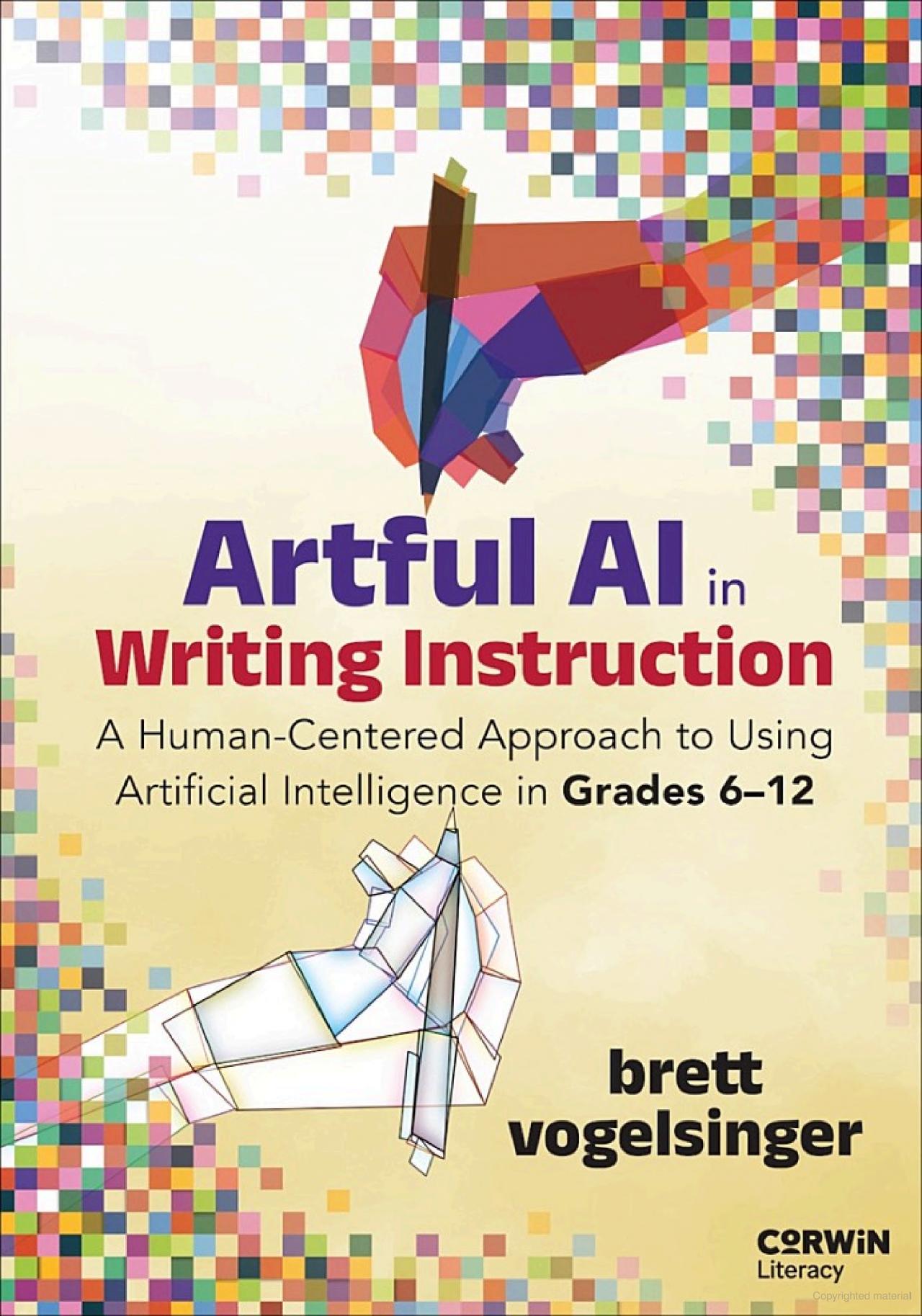
Artful AI in Writing Instruction: A Human-Centered Approach to Using Artificial Intelligence in Grades 6–12
Brett Vogelsinger
Available through the ATA library.
Rhetorical: Learning how writing works
A rhetorical approach involves using AI to help students better understand how writing works, particularly in terms of audience, purpose and style. AI can help students compare human- and AI-generated texts, deepening their understanding of rhetorical choices and gaining insight into how different writing styles and strategies can shape communication.
An assignment may ask students to draft an initial response to a prompt in class (e.g., an argument for cellphone bans in school) and then ask AI to generate a response to the same prompt. The assignment may ask students to compare the two drafts and point out similarities and differences in the argumentative moves in each.
Critical: Examining the implications of AI
A critical approach encourages students to engage in critical thinking regarding the ethical, social and technological implications of AI. This could involve exploring issues like bias in AI, the environmental impact of large language models or the implications of using AI to complete writing assignments.
Writing assignments that explore the critical dimensions of AI may not use AI at all but ask students to research more about the tool. One such assignment might ask students to run one of their own written assignments through an AI plagiarism detector, read reports about biases and inaccuracies in such technologies, and then write a reflection about what they learned through the process.
Aligning AI and teaching strategies
These categories provide distinct but complementary ways to align AI use with specific teaching goals. By deciding whether an assignment should emphasize assistance, resistance, creativity, rhetoric or critique, educators can intentionally guide how students interact with AI rather than letting the technology dictate classroom practice.