
ATA Magazine
Policies, not targets … and making the case for hope
Climate change expert Andrew Leach shares his thoughts
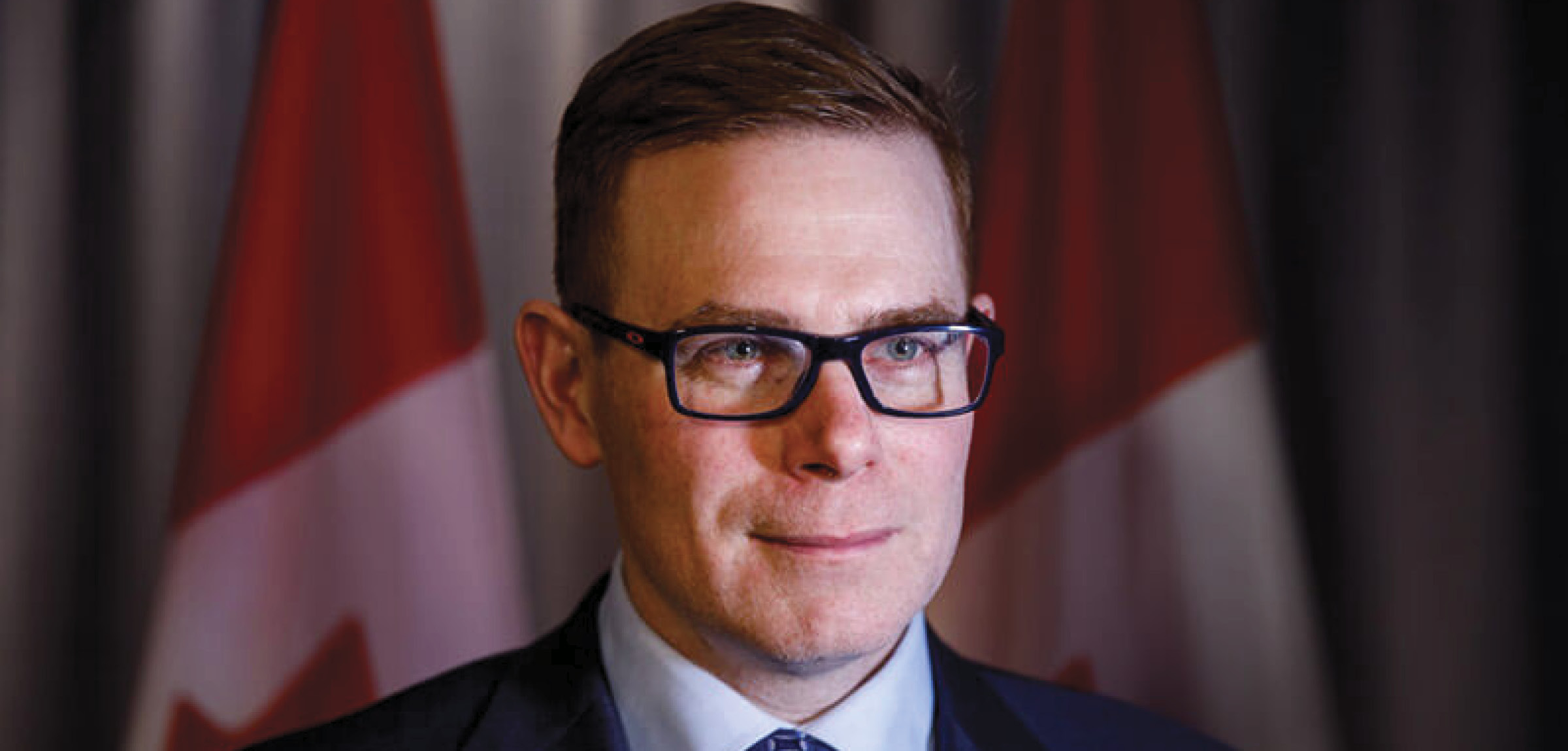
Policies, not targets, are what are needed to address climate change.
That’s one of the messages contained in Between Doom & Denial, a book by Andrew Leach, a University of Alberta economist who served as chair of Alberta’s Climate Change Advisory Panel in 2015 and one of Canada’s foremost experts in climate change policy.
In the book, Leach writes that, globally and within Canada, it’s common to find governments that are willing to make ambitious emissions reduction pledges that would combine to limit temperature increases to less than two degrees, but without the policy ambition to deliver on those goals.
For example, following the Paris Agreement of 2015, Canada committed to achieving net zero emissions by 2050 and a 40 to 45 per cent reduction in emissions relative to 2005 levels by 2030.
Canada has increased action on climate change through initiatives like national carbon pricing, clean fuels and clean electricity regulations, vehicle emissions standards and subsidies for emissions-reducing capital investment. These actions have slowed the growth of emissions but haven’t put us on a path toward meeting our commitments.
“Despite substantial technological and policy progress, Canada remains far from meeting its targets,” Leach writes. “I would much prefer that Canada focus on the stringency of our emissions mitigation policies than promises of outcomes we cannot guarantee.”
A drop in the bucket?
Canada sits 12th among the world’s top emitters of greenhouse gas (GHG) emissions, far behind the frontrunners China, U.S. and India in terms of total volume of GHG emissions. However, in terms of GHG emissions per capita, Canada sits fourth, with Canadians’ consumption habits producing emissions at 2.5 times the global average.
Some argue that, since Canada produces less than two per cent of global emissions, it shouldn’t be expected to pursue reductions; however, Leach argues that even the largest emitters cannot address climate change on their own and that “the lowest cost climate mitigation strategy is to get as many countries as possible to put in reasonably similar levels of effort.”
“If Canada doesn’t take measures to address emissions, it risks being subjected to external measures imposed by the rest of the world,” Leach writes.
Our ability to produce clean, renewable power is far and away [above] what anyone would have expected 10 or 15 years ago ... that’s the big thing that gives me hope.
Andrew Leach
Reason for optimism
Leach was the architect of Alberta’s policy to phase out coal-fired power generation. Announced by the Rachel Notley government in 2015, the policy called for the end of coal power by 2030. However, the last coal-fired plant went offline in 2024, having switched to natural gas as a fuel source. This change resulted in a 50 per cent reduction in GHG emissions from power generation.
Leach says the speed of Alberta’s coal phase-out surprised experts and illustrates how quickly technological change can occur once clear policies are in place. As further cause for optimism, he pointed to the rapid advancement in low-cost solar and wind power, as well as utility-scale battery storage.
“I’m not saying it’s going to be perfect by any stretch of the imagination, but I think we’re going to have a vastly different world in terms of being able to adapt, being able to mitigate emissions. Another 20 years of progress like we’ve had in the last 20 and our energy systems are going to be unrecognizable.”
Countering misinformation
| Climate change myth or misconception | More accurate climate/environmental information |
|---|---|
| “The climate has changed before. It has nothing to do with humans.” | Many factors can change the climate. Right now human activities, especially burning fossil fuels and the destruction of ecosystem resilience, are the major factors. |
| “Scientists are still debating climate change.” | Ninety-seven per cent of scientists agree that climate change is happening and is human-driven, and over 99.9 per cent of studies confirm those positions. |
| “There have always been natural disasters. What we’re seeing now is no different.” | Climate change is increasing the overall frequency, erratic occurrences and intensity of dangerous weather events like storms, droughts and high temperatures. |
| “There’s nothing we can do about climate change.” | Because humans are driving climate change, humans can slow it down by doing fewer of the things that cause it and finding different ways to get what we need and want. |
Source: An Educator’s Guide to Climate Emotions. Climate Psychology Alliance, North America.
Recommended resources
Accelerate Climate Change Education in Canadian Teacher Education
This project supports climate change education (CCE) in preservice and inservice teacher education across Canada through consultations, webinars, online courses, grants and resources.
Columbia Basin Environmental Education Network (CBEEN)
The CBEEN website has a list of recommended resources to help teachers deliver accurate, effective, empowering and age-appropriate climate change lessons and programs.
International Panel on Climate Change (IPCC) Sixth Assessment Report
Working Group III: Mitigation of Climate Change
This report provides an updated global assessment of climate change mitigation progress and pledges, and examines the sources of global emissions.
ATA Library
Teaching Climate Change to Children: Literacy Pedagogy that Cultivates Sustainable Futures
The authors argue that understanding climate change is crucial for young learners and emphasize how reading, writing and language skills can empower children to take action and make a difference.
Traditional Ecological Knowledge: Learning from Indigenous Practices for Environmental Sustainability
This book focuses on how traditional environmental values of Indigenous peoples are applied to the uses and management of land and natural resources.
Available through the ATA library.
Email: library@ata.ab.ca
Phone: 587-686-7356
Toll Free: 1-800-232-7208