
ATA News
Supporting teachers with disabilities in the profession
Supporting teachers with disabilities matters, both for our profession and for public education.
I work with the Teachers With Disabilities (TWD) Network, one of the Alberta Teachers’ Association’s pilot Diversity Equity Networks. Only about three per cent of members self-identify as teachers with a disability, while many estimate that one in five people has a disability. What explains this discrepancy? While it can be examined through many lenses, one explanation is possible: stigma and stereotypes remain powerful.
Even when teachers view themselves as having a disability, many are not in the habit of disclosing or discussing their diagnoses. In the TWD Network, we regularly hear about fears of material consequences: being ruled out for teaching jobs or promotion, workplace exclusion, or being deemed incapable of duties and assignments that genuinely interest them.
Neurodivergent communities, especially among people with autism, use a word for the deliberate attempt to present in a social context as neurotypical or nondisabled: “masking.” Another phrase we hear often is imposter syndrome, the need to pretend to fit effectively into a role one occupies, often very competently, while living with the fear of being found out as not belonging.
Ironically, imposter syndrome can cut both ways. Some teachers express interest in attending TWD meetings but worry they are not “disabled enough,” despite having symptoms that tangibly affect their working lives. To clarify, the TWD Network welcomes everyone, including allies. We are not in the enterprise of triaging needs or creating hierarchies. Every working teacher who identifies with a disability—or who prefers an adjacent term such as their specific diagnosis—adds to the collective effort to better understand and support teachers with disabilities in Alberta’s public education system.
Part of the challenge lies in the word itself. Disability grew to prominence through clinical practices measuring a perceived lack of “typical” functioning; the Latin prefix dis- even implies a lack. People-first language (for example, “a teacher with ADHD”) has become an institutional norm to amplify the person rather than the impairment. Terms such as neurodiverse and neurodivergent describe differences like autism, ADHD and learning disabilities without suggesting they are “lesser.”
Many of us in the network understand disability not as a solely internal state but through social- and rights-based models. Individuals may have functional impairments, but society has an obligation to eliminate arbitrary and unconsidered barriers that restrict full participation in public life, including in workplaces. In this sense, disability can become a positive term that represents self-advocacy; activism; and the pursuit of equity, pride and community.
Another aversion surrounding disability is the fear of reliance on other people or on technology. But this overlooks how all humans are interdependent, tool-using beings. Computers, cars, sidewalks and microphones, for example, all help us surpass our natural limits. It tends to be only when support registers as “different” that aversion manifests.
When we declutter these conceptual barriers, the importance of teachers with disabilities becomes clearer. In the short life of the TWD Network, we have met excellent teachers whose greatest barrier is often limited self-confidence. The confident presence of self-advocating teachers who are neurodivergent and/or have physical disabilities helps make educational spaces more accessible for students, parents and colleagues alike. Further, teachers with disabilities provide meaningful role modelling for students who rarely see themselves reflected at the front of the classroom (though, notably, some teachers have struggled to access the very accommodations their students receive).
Anyone who has been taught by a teacher who truly loves their subject knows how contagious that enthusiasm can be. Many neurodivergent teachers can bring particularly intense interests to their teaching, and that depth of engagement can spark students’ curiosity. Traits such as hyperfocus can also, at times, be advantageous in helping manage the volume and complexity of the job. While the casual appropriation of diagnostic language (“I’m so OCD today”) is unhelpful, it is also true that many feelings, traits and experiences associated with disability exist on a continuum. As the universal design model suggests, making accessible workplaces with these realities in mind benefits everyone.
On a personal note, though my life may appear pretty ordinary and I carry social privilege, I have five disability diagnoses. Each has made me more vulnerable to institutional barriers, but each has also enriched my teaching practice and my experience of life. Disability runs through our families and communities in ways that are often invisible. It impacts us all, and greater support and recognition of teachers with disabilities are good for our profession.
What changes when teachers no longer feel pressure to mask who they are? We gain colleagues who can participate fully and confidently. We gain professional conversations shaped by a wider range of lived experience. We gain school communities that are truly a place for all.
John Williamson has been in the teaching profession for 29 years and holds a doctorate of philosophy, with a focus on inclusive education. He dedicates this article to those working to support the ATA’s DENs, especially Andrea, Christina and Tawny.
The Teachers with Disabilities DEN is a provincial network that provides a safe and brave space for teachers with disabilities. For more information on the DEN and its meetings, please email TWD@ata.ab.ca.
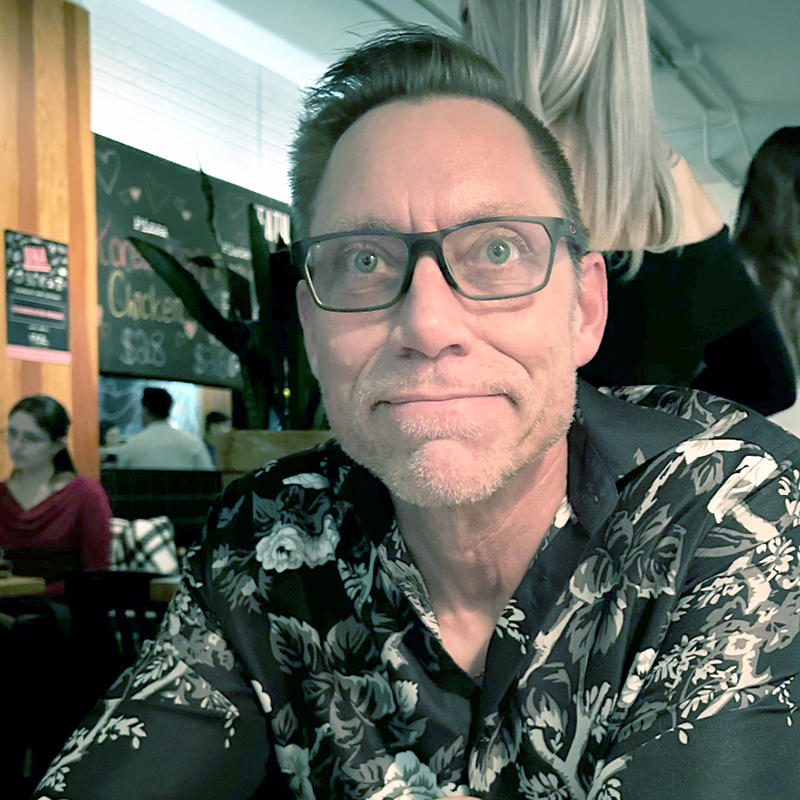
John Williamson
ATA Teachers With Disabilities Network lead