ATA Magazine
Need a lift?
Way back when I was a bright-eyed first-year teacher with a head of glorious curly hair—the kind that obeyed neither gravity nor reason—I somehow got it into my head that I should apply to present a workshop at the ATA Science Council conference at the Banff Centre. What I lacked in teaching experience, I more than made up for in unbridled enthusiasm, untamed creativity and a deep desire to make learning experiential, memorable and fun.
So it was on the afternoon of Remembrance Day 2004, I found myself pulling into Banff as the setting sun started to dip behind Mount Rundle. Little did I know at the time that the next two days would change my life forever.
The conference was great! Dr. David Suzuki delivered an opening keynote related to his recent documentary series, The Sacred Balance, sharing new insights from environmental science research presented through Haida, Blackfoot and Māori lenses. I was, and still am, a Suzuki super fan, so needless to say, I found Suzuki’s presentation empowering and inspirational. It modeled for me an approach to teaching science that I have tried to advance throughout my career. As a self-described “young punk” teacher in my 20s, I also found it very cool that Suzuki stayed at the conference after his keynote to visit with science teachers from across the province over charcuterie and beer.
The next day, I presented my session, “Wow! Chemistry Demos and Activities for Grade 5 & 9 Teachers.” Although I was initially anxious about presenting to a room full of more experienced teachers, once I started sharing my thoughts about making science education more hands-on (and messy), the sounds of furious notetaking and excited chatter in the room quickly told me that my ideas were worth sharing.
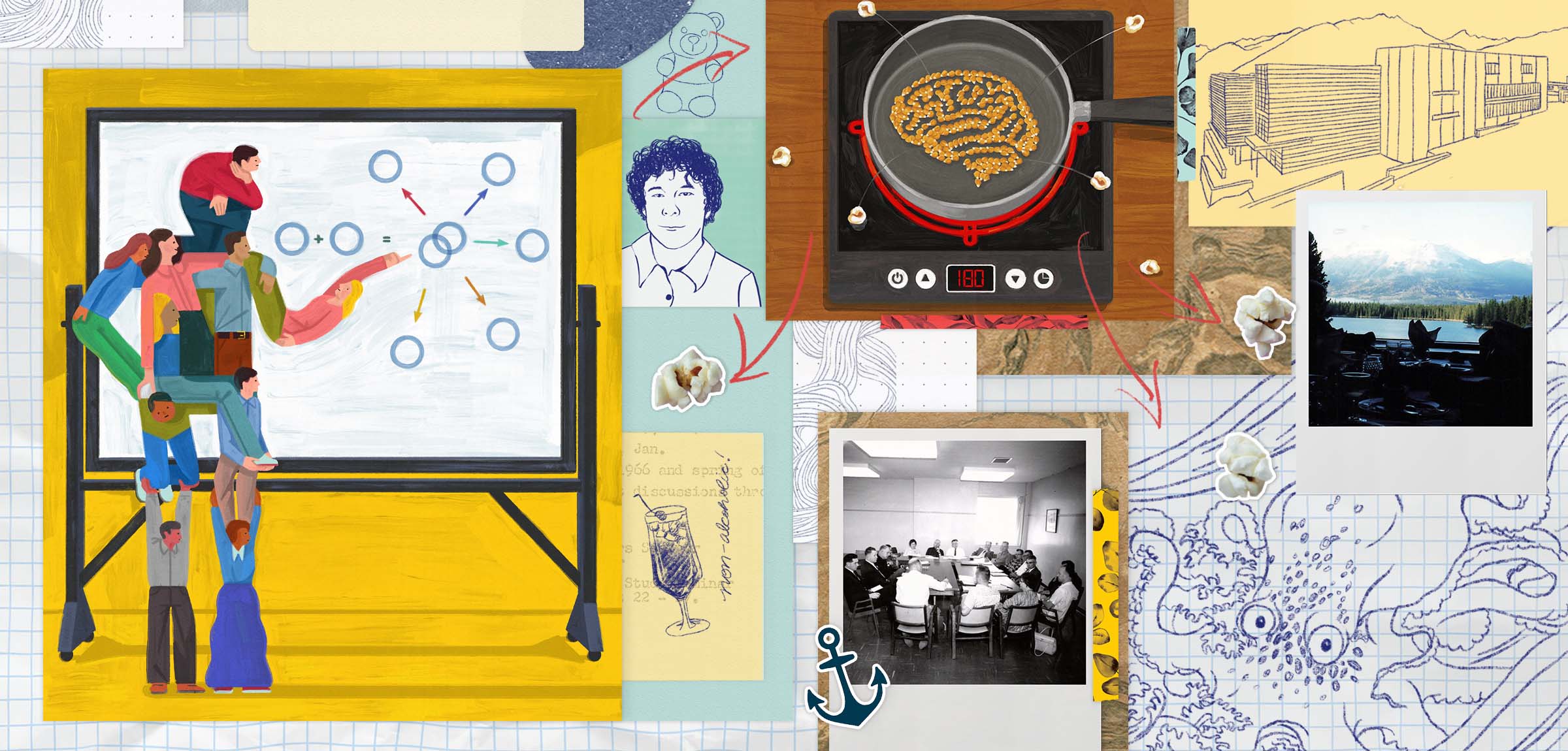
For the next 90 minutes, we laughed and learned together. I melted a frozen puck of butter containing popcorn kernels in an open electric frying pan to demonstrate state changes and the particle theory of matter. We shook milk into ice cream using salt, ice and sheer muscle power. We made layered drinks (Shirley Temples) to explore density. We mixed common chemicals in Ziploc bags to produce colour changes, gases, solids and wild temperature changes. The session ended in a flash of light and the smell of burning sugar with me, standing outside the floor-to-ceiling windows, exothermically obliterating a gummy bear in a test tube of molten potassium chlorate.
This first kick at delivering professional development was so overwhelmingly positive that it led me to apply as a speaker at my teachers’ convention the next year. Then, I was hooked! By the time I applied to be an ATA PD staff officer 10 years later, I was routinely presenting at the province’s 10 conventions and conferences planned by the Science and Global, Environmental & Outdoor Education councils.
More than 20 years later, my enthusiasm is a bit more bridled, my creativity a bit tamer, but my desire to make learning experiential, memorable and fun has never been deeper—and I owe it all to my first specialist council conference.
The first ATA specialist councils founded in 1961:
|