ATA Magazine
From potato salad to shared curiosity
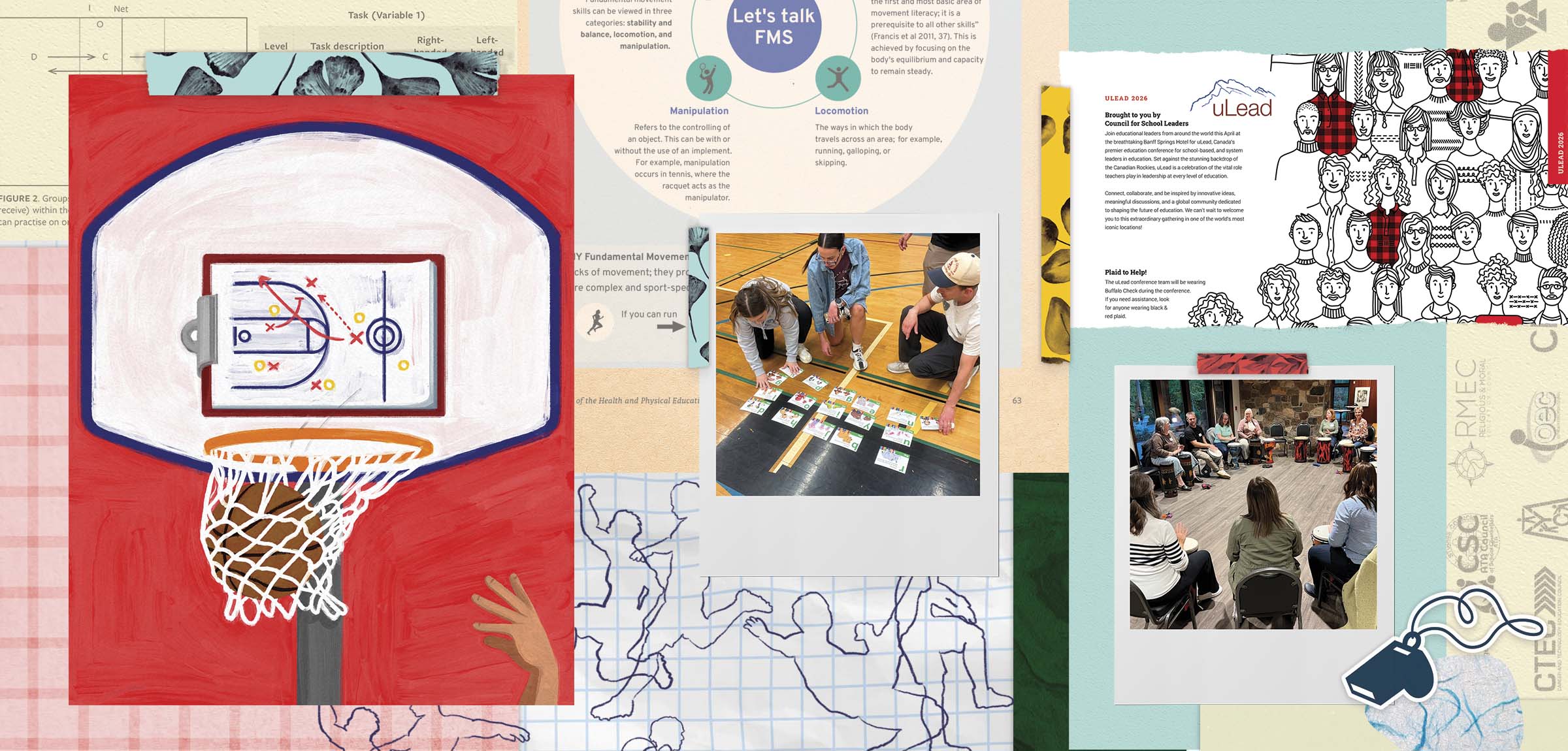
There is a moment early in the career of most physical education teachers when we realize we are going to spend a good portion of our professional lives gently, and sometimes not so gently, correcting a common misconception.
My moment came at a family barbecue. As I balanced a paper plate on one knee, someone said, “So, Stacey, you teach gym? That sounds like a lot of fun!”
I smiled and took a deep breath.
“Actually, I teach physical education,” I said.
The pause that followed was familiar. Another relative chuckled and said, “Isn’t that the same thing?”
I laughed too, because if I hadn’t, I might have launched into a 20-minute lecture on pedagogy, curriculum, assessment and learning theory over a plate of potato salad.
That moment, lighthearted as it was, captured something important: physical education is deeply meaningful to those who teach it but often misunderstood by those who don’t. Physical education is not a place or a piece of equipment, it is an intentional, pedagogical space where movement, learning, identity and well-being intersect.
It was that recurring mix of humour, frustration and deep professional care for how my work is understood that ultimately drew me toward a broader community of teachers who shared my language and my passion for physical education—the ATA’s Health and Physical Education Council, or HPEC.
A living classroom
When I first joined HPEC, I couldn't have imagined how deeply that experience would shape my understanding of leadership and learning. What began as a simple volunteer commitment to serve as vice-president of curriculum leadership and pedagogy quickly became a living classroom, a place where theory met practice and every conversation, meeting and conference reminded me why education in Alberta thrives on relationships.
Through my work with HPEC, I saw firsthand the deep passion that physical education teachers hold for movement and for students. I have yet to meet a PE teacher who was in the profession simply to roll out a ball for another game of dodgeball. Instead, I have met educators who care deeply about confidence, belonging, resilience, joy and lifelong well-being; teachers who understand that movement is not separate from learning, but foundational to it. The laughter echoing off gym walls, the quiet encouragement offered to a reluctant student, the careful design of inclusive movement experiences, these are not accidental acts. They are the work of highly skilled professionals who see the whole child.
The laughter echoing off gym walls, the quiet encouragement offered to a reluctant student, the careful design of inclusive movement experiences, these are not accidental acts.
Through HPEC, I saw how powerful it is when teachers come together to rethink their practice, to bridge curriculum outcomes with lived experience, and to invite movement, voice and connection back into learning. This kind of pedagogy doesn’t just teach content, it cultivates belonging. And belonging, in our schools and professional networks, is what fuels our collective growth.
Through HPEC, I have seen teachers lead through small acts of kindness, creative risk-taking and shared curiosity. I have learned that leadership often looks less like standing at the front of a room and more like showing up for one another, one thoughtful conversation, one courageous act of learning and one generous gesture of volunteerism at a time—sometimes with a whistle, sometimes with a research article and sometimes with a sense of humour about being asked, yet again, whether we “teach gym.”
Volunteerism has always been the quiet engine of education. Councils like HPEC remind us that professional learning isn’t something that happens to us; it’s something we build together. When teachers volunteer their time to mentor, plan, present or advocate, they reaffirm the core values that anchor our profession: trust, collaboration and shared responsibility for the future of education.