
ATA News
Government, opposition debate education issues
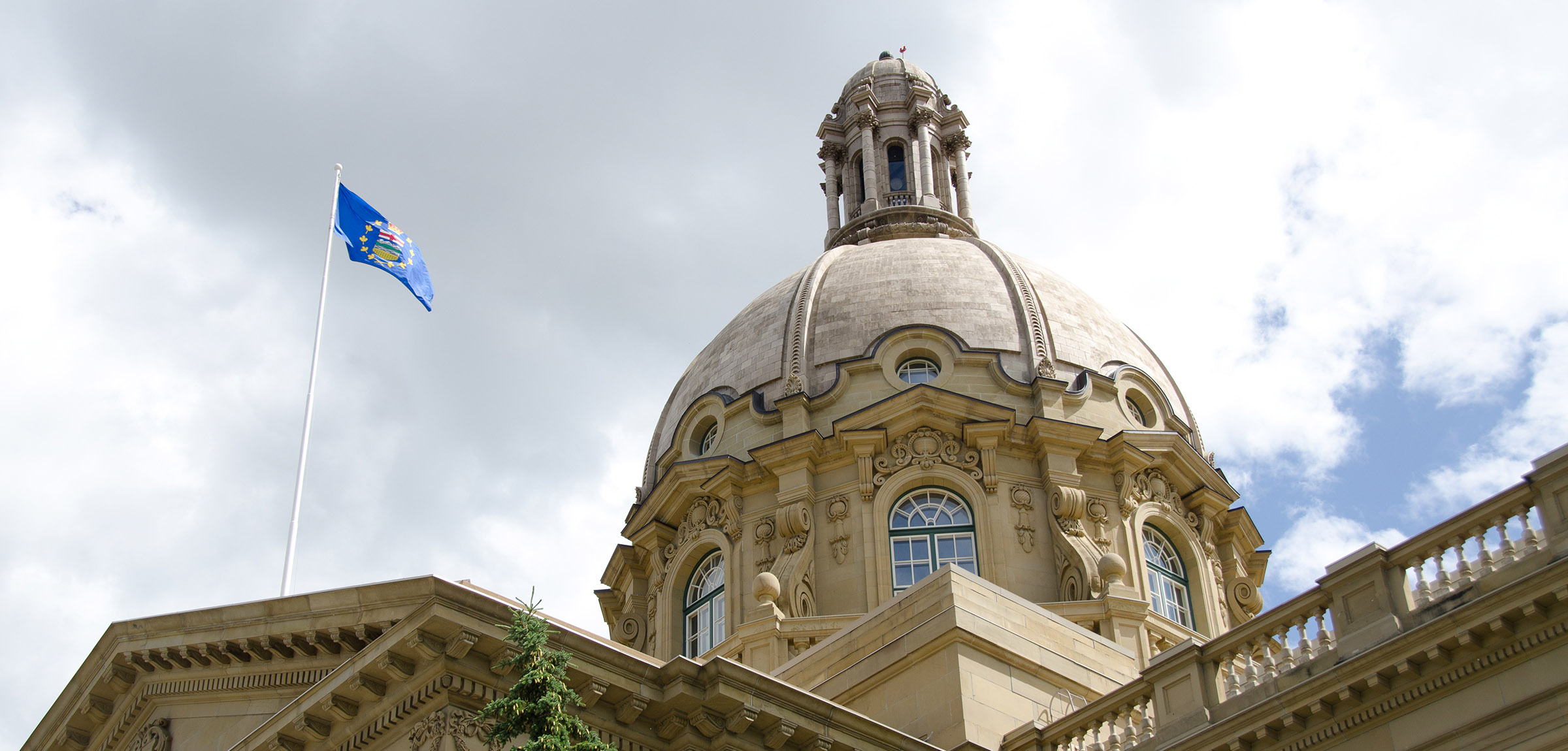
The fall sitting of the legislature adjourned on December 10. Standing orders state that the house will reconvene the second Tuesday of February, unless otherwise noted. Here is a summary of the education-related discussions that took place in question period from December 8–10.
Provincial Achievement Test Results, December 8
Amanda Chapman (NDP MLA for Calgary-Beddington) asked Minister of Education and Childcare Demetrios Nicolaides how the UCP’s new K–6 curriculum had performed on the latest Provincial Achievement Tests (PATs).
Nicolaides responded that PAT results showed continued improvement from the COVID-19 period and that some measures were returning to pre-COVID levels. He noted that the results still required further evaluation.
Chapman pressed further, citing Grade 6 English language arts results in which acceptable-level achievement dropped 10 per cent, excellence dropped 7 per cent and 20 per cent of students fell below acceptable—contrasted with stable Grade 9 results under the previous curriculum. She asked whether students, teachers or the government’s curriculum caused the decline.
Nicolaides said that it was “rich” for the NDP to raise literacy concerns after voting against Bill 6, which he said supported literacy and numeracy. He asserted that the UCP remained focused on strengthening these skills.
Chapman then highlighted Grade 6 math results, where acceptable achievement dropped 16 per cent and nearly 40 per cent of students performed below acceptable. She asked whether the minister would apologize to teachers for ignoring their warnings about the curriculum.
Nicolaides said the government listened to teachers and other professionals, pointing to the approval of more than 150 school projects since 2019 (compared with 46 under the NDP), an 11.7 per cent increase in education funding, and additional supports for mental health and specialized programming.
Bills 2 and 14, December 9
Leader of the Official Opposition Naheed Nenshi questioned the government’s honesty, arguing that Albertans should be able to trust ministers’ statements. He said that the minister of Education and Childcare and the minister of Infrastructure had publicly indicated the government never intended to reach a deal with teachers and had planned from the outset to use the notwithstanding clause to avoid paying them more. He asked Premier Danielle Smith to confirm whether she had engineered the teachers’ strike.
Smith denied the accusation. She asserted that ATA leadership had been preparing teachers for a strike as early as May, while the government repeatedly returned to the table and reached negotiated settlements. She said teachers’ leadership introduced additional demands at the last minute, leaving the sides farther apart. Smith claimed the government acted to get teachers back to work, arguing that students’ learning needed to be protected.
Nenshi countered that Smith refused to take responsibility and was contradicting her own ministers. He asked whether Albertans could trust ministers at all.
Smith responded by invoking parliamentary supremacy and said judges sometimes overstepped by creating new law. She argued the notwithstanding clause existed precisely for such circumstances and reiterated that the legislature could amend laws at any time.
Nenshi replied that even students learned about separation of powers and accused the government of violating it daily. He then raised concerns about recall legislation, noting that the minister of Affordability and Utilities had told constituents the government would repeal recall rules, but the government did not. He cited reports that the recall petition against that minister might be an astroturf effort by UCP supporters and asked whether Smith saw this as a flaw in her legislation.
Smith claimed unions and advocacy groups were abusing the recall process and had turned the legislation into a mockery. She said the government was monitoring the situation for possible changes, noting the law was modelled on British Columbia’s long-standing system. She argued the opposition was weaponizing recalls due to policy disagreements and said such disputes should be settled in an election, which she looked forward to contesting.
Collective Bargaining with Teachers, December 10
Nathan Ip (NDP MLA for Edmonton-South West) argued that the government had launched the biggest attack on teachers in Canadian history by stripping them of their bargaining rights in a single day by using the notwithstanding clause. He asked Nicolaides whether this approach had been worth it.
Nicolaides responded that the government had worked diligently to improve classroom conditions through initiatives such as the Class Size and Complexity Cabinet Committee and expected positive results.
Ip pressed further, stating that removing teachers’ rights had not improved class sizes, classroom complexity or teachers’ working conditions, and noted that two ministers had admitted they did not respect the arbitration process. He asked why the government spent the session attacking teachers instead of bargaining fairly.
Nicolaides replied that the government recognized teachers’ hard work and accused the NDP of sowing division, saying the government was focused on results, investments, new schools and smaller class sizes.
Ip then highlighted a $200,000 sole-source advertising contract used to attack teachers and noted that the same firm had previously received $300,000 for Alberta Next Panel videos that attacked immigrants and others. He argued that the half-million dollars spent on advertising could have gone to classrooms and asked why the government wasted money targeting teachers.
Nicolaides responded that the NDP focused on rhetoric about attacks and division, while the government aimed to bring Albertans together. He contrasted the NDP’s record of approving 46 school projects and raising education funding by 11.6 percent with the UCP’s approval of 150 school projects and increases of over 11.8 percent.
Bills 2 and 9, December 10
Kathleen Ganley (NDP MLA for Calgary-Mountain View) stated that on Human Rights Day the government had spent the session trampling the fundamental rights of Albertans, including using the notwithstanding clause to strip teachers of their bargaining rights, which triggered one of the largest protests in the legislature’s history. She asked why the government violated teachers’ rights and forced through a plan that did nothing to improve education. Nicolaides responded that the government had worked to improve classroom conditions, invested more in education than the NDP had, built more schools and collaborated with teachers to address challenges driven by unprecedented enrolment growth.
Ganley then argued that the government had also used the notwithstanding clause three times to trample the rights of trans youth. She said Bill 9 would cause irreparable harm and escalate homophobic and transphobic attacks, and asked why trans youths’ rights were so disposable to the government.
Joseph Schow, minister of Jobs, Economy, Trade and Immigration, responded by criticizing a heckle from the opposition and then claimed the opposition was unconcerned about protecting girls from being “brutalized” in sports by allowing biological males to compete against them.
Ganley concluded by noting that Human Rights Day commemorated the UN Declaration of Human Rights, and asserted that the UCP often claimed they would never support anything the UN did, even inalienable rights. She said the government’s reliance on the notwithstanding clause showed they knew they were violating rights and she asked whose rights they would violate next.