
Rebuilding the Special Emergency Fund a priority in the wake of the 2025 strike

Question: Why is the Association going to charge me $40 more per month in dues?
Answer: At its January meeting, Provincial Executive Council had to deal with a thorny question—how to restore the Association’s financial capacity following our provincewide labour action.
Going into the strike on October 6, 2025, the Special Emergency Fund (SEF), used to fund extraordinary bargaining and strike related expenses, stood at $25.5 million dollars. Although the Association did not distribute strike pay, it committed to maintaining health benefit coverage for all teachers for the duration of the strike. By the time the strike ended by the passage of Bill 2 on October 27, the Association was on the hook for $24 million for benefit payments alone, with other expenditures relating to communications, advertising and strike support, bringing the total dollars committed to between $25 and $26 million.
While the Association will cover a portion of the costs incurred by reallocating about $5 million internally, effectively the SEF has been fully depleted. Restoring it on an expedited basis is important to send a strong signal to the government and school boards about teachers’ capacity and intention to return to bargaining from a position of strength at the expiry of the legislated settlement. Furthermore, it will provide the means to fund activities in advance of the next round of bargaining to build greater Association capacity and build public support for teachers.
Now, those who follow this column closely (all three of you), may recall that I had dealt with this scenario previously and had indicated that decisions about replenishing the SEF would ultimately be made by the Annual Representative Assembly (ARA) through the Association’s budget process. Although this has been our practice over the years, there is another provision in the General Bylaws of the Association that I had not fully considered in my previous answer but has now come into play.
Bylaw 11 allows Provincial Executive Council, when it believes that an emergency exists, to authorize, at its own discretion, the collection of an additional fee not exceeding $20 per week per member during the continuance of the emergency and for so long thereafter as it deems advisable, adding the fees collected to the SEF. This provision was last used over two decades ago, but for a relatively short period of time and in close proximity to the provincially coordinated local labour action of 2002.
By means of a weighted vote, Council decided that the current circumstances justified making novel use of bylaw 11 to levy a fee of $10 per week ($40 per month) beginning in February 2026. The fee, half of the maximum permitted under the bylaw, would be collected for up to 16 months, by which point the SEF would be restored to prestrike levels.
Recognizing that members had made a substantial financial sacrifice during the strike, Council has determined that it will not seek to collect regular Association fees for the month of October 2025. Under the Teaching Profession Act, the regular Association fees are set on an annual basis by ARA. Amending the fees for 2025/26 to reflect the decision not to collect the money that would be owed for October 2025 will require some fancy procedural footwork, likely including the convening of an emergent representative assembly concurrent with ARA 2026. More information will be forthcoming to ARA delegates in the next month or so.
This approach to managing the replenishment of the SEF has the advantage of being more transparent, flexible and less distorting of Association finances than collecting similar funds by means of a conventional fee increase. It will also provide for a clear direction forward on an issue that has captured the attention of locals, seven of which have submitted ARA resolutions proposing diverse and conflicting solutions. Most importantly, the rapid replenishment of the Association’s fiscal capacity will be essential to positioning teachers and doing essential groundwork in advance of what will likely prove a contentious round of collective bargaining that will be in full swing in 2028.
While the temporary fee will address the immediate problem and secure the SEF for the immediate future, there remain other more fundamental questions concerning the purpose, deployment and size of the SEF that teachers may wish to address through Council, their locals and ARA.
Questions for consideration in this column are welcome. Please address them to Dennis Theobald at dennis.theobald@ata.ab.ca.
Q&A–Supplement
Rebuilding the Special Emergency Fund a priority in the wake of the 2025 strike
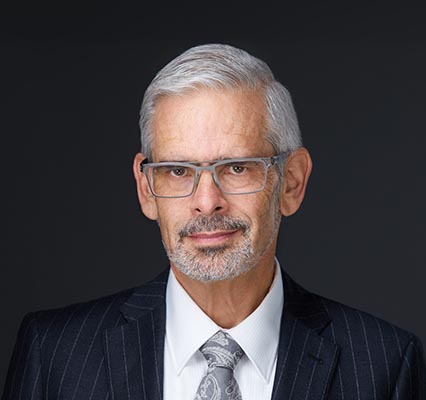
Dennis Theobald
ATA Executive Secretary
In the Feb. 3 issue of the ATA News, executive secretary Dennis Theobald answers the question “Why is the Association going to charge me $40 more per month in dues?” Below he answers additional questions related to the supplementary fee.
Question: Why should I pay the supplementary fee?
Answer: Just as I was answering the question that appears in this edition of the ATA News about the reason for Provincial Executive Council’s decision to introduce a supplementary fee, I received, as did some members of Council, several related questions from members. I want to provide supplementary answers to address the common themes these questions raised.
Question: Why should those who receive an individual benefit be paying the same supplementary fee as those who receive the family health benefit? Why should teachers who have to pay for all or a portion of their benefits have to pay the supplementary fee?
Answer:I think the way we frame the Council’s decision is important to understanding why all active members are required to pay the supplementary fee.
The Special Emergency Fund (SEF) has been built up over decades by contributions made by all members of the Association throughout their teaching careers. In October 2025, teachers on strike benefited from the money committed by others, including those who had left the profession. Payments from the fund are meant to support the collective, and it is not set up to be an individual teacher’s emergency savings account. That is why, well in advance of the strike, the Association was urging members to build up their savings or arrange for lines of credit.
At the outset of the strike, Council decided that its priority was to maintain continuity of benefits for members, and directed that the Association undertake to pay benefits to school boards on behalf of striking members in accordance with the provisions of section 155 of the Labour Relations Code. The total cost of that commitment is still being finalized, but it will be around $25 million, which, coincidentally, is the same as the value of the SEF when the strike began. Although we will redirect some internal funds to help with this payment and other strike and bargaining expenses, the SEF is fully committed to covering this liability.
That, though, is water under the bridge. The SEF’s mandate includes supporting members while they are striking, but it is not set up to be an individual teacher’s emergency savings account. The maintenance of benefits was within that mandate and saved members collectively from having to submit payments individually to their employer.
The challenge now is not repaying the cost of benefits, but, rather, re-establishing the SEF’s financial capacity. The decision to charge a separate fee is all about making sure that should labour action be necessary following the expiry of the legislated settlement in 2028, the SEF will have the capacity to support members and the action at that time.
While some individual members may have benefited or been disadvantaged disproportionally by the Association paying health benefits, it is important to note that, like the strike itself, the decision to cover benefits was taken in the collective interest. The decision to re-establish the SEF to its prestrike level is also a decision made in the collective interest, looking forward two years to the next round of bargaining, not backward.
Collective decisions impose costs and benefits that must be borne and realized by teachers together. Realistically, there should be no expectation that individuals will be treated differentially according to their varying personal and employment circumstances. In fact, it is impossible to do that and still take collective action.
Question: What gives Provincial Executive Council the right to decide to charge a supplementary fee? Shouldn’t this go to a vote of the members? Can ARA override it?
Answer: In deciding to implement the supplementary fee, Council was exercising its power under general bylaw 11. There is no requirement that the decision be approved by plebiscite or authorized by a representative assembly. This bylaw is nothing new. Although it has been used infrequently, it was originally adopted in 1955 and amended periodically. It, together with other bylaws, sets out the roles and responsibilities of Council, locals and members establishing the governance structure of the Association.
Generally, the Association operates as a representative democracy. Elected representatives, be they members of Provincial Executive Council, local executives or delegates to the Annual Representative Assembly, make decisions in the interests of the teachers they represent and in the greater interest of the entire membership. Only a few of the many decisions to be made are referred to the membership for a direct vote. Typically, these involve the potential approval of terms of a collective agreement or, alternatively, whether to take strike action. Such votes are mandated by the Labour Relations Code, a piece of provincial legislation.
Because Council, in making the decision to implement the supplementary fee, was acting within its exclusive authority, only it can decide whether it wishes to stand by the decision or reconsider it. The PEC decision cannot be overturned by a representative assembly.
That said, a representative assembly does have the responsibility to set the Association budget and the membership fees, so it could attempt to “undo” the effect of the decision by adjusting the amount transferred in the budget to the SEF and/or setting fees at levels other than those proposed in the tabled budget. This might have the effect of speeding up or slowing down the replenishment of the fund. A representative assembly could also pass a motion calling upon Council to rescind or modify the supplementary fee, which, although not binding, would be directory and taken very seriously.
But before anyone gets too busy writing up ARA resolutions, I think some questions remain to be answered. If not by means of the supplementary fee, then how should the SEF be funded? In what amount? For what purpose? And on what timeline?
Already at least six local resolutions have been received addressing this topic, but there is no consensus among them on these critical questions. Council chose to step up and, in the vacuum, provide leadership and a solution. Those proposing alternatives will have to explain how their proposals would fit into the larger strategy that the Association must put into place immediately to build future capacity for collective bargaining and potential labour action.
Question: Why do we have to build up the fund so quickly? A smaller payment over a longer period would be easier for members to handle. Alternatively, could we cut other expenditures to fund the restoration of the SEF?
Answer: In deciding to charge the supplementary fee for a maximum of 16 months, beginning in February 2026, Provincial Executive Council was considering the several factors. The first is that collective bargaining for the successor agreement will begin as early as 2027. The Association will need to have the resources in place to support bargaining and that includes, at minimum, a replenished SEF. Furthermore, the very public act of restoring the SEF sends a strong message to the Teachers’ Employer Bargaining Association (TEBA), school boards and the provincial government about teachers’ determination to bargain from a position of strength and pick up where we were when the government legislated a settlement.
A couple of other related points. The Association has been able to divert $5 million internally to help replenish the fund. This represents about 10 per cent of the ATA’s annual budget. Because so many of the Association’s expenditures are effectively nondiscretionary (e.g., rebates to locals, grants to specialist councils, representation of and legal support for members, payment of staff salaries, building expenses, taxes and insurance) it is very difficult to divert more from the operations budget to the SEF without cutting core programming. Realistically, it is impossible to cut our way to a reconstituted SEF on any short- or medium-term timeline.
Of course, members may still have other ideas and priorities. The annual budget of the Association is set by the Annual Representative Assembly (ARA), which will convene on the May long weekend. ARA delegates are presented with the budget and can propose and vote on line-by-line changes to Association expenditures, including payments into the SEF and on the resulting fee. Members are encouraged to share their views about Association budget priorities with their local executive members and ARA delegates. If nothing else, the ATA is dedicated to effective representative democracy, and every member has a role to play and an opportunity to make their voice heard.
In closing, a small piece of good news: because the supplementary fee is a form of dues being collected by a union, it is tax deductible. That means that the real cost of the $10 per week after taxes will be $6 or $7.
ATA Executive Secretary