ATA Magazine
Taking the 'person' out of 'personalized' land acknowledgements

Land acknowledgements have become increasingly present in our daily lives. These statements, which recognize Indigenous Lands, Peoples and Languages, and commitments to our relations, are often intended as gestures of respect and commitment to reconciliation. Land acknowledgements recognize numbered Treaties within Alberta, Métis Territories and Districts of the Otipemisiwak Métis Government and Nations, and communities from the places and spaces where they are shared.
As these acknowledgements become more common, many individuals and organizations have taken up the call to make them more meaningful and authentic. A common response has been to personalize them—injecting personal reflections or stories to avoid performative repetition. While this may be well-intentioned, it can inadvertently center settler identities and perpetuate colonial narratives.
Personalized land acknowledgements may risk recentering non-Indigenous voices rather than focusing on commitments rooted in relational responsibility.
Rethinking personalization
Instead of personalizing land acknowledgements, what if we approached them as opportunities for relational renewal? This means grounding acknowledgements not in personal experience(s), but in shared responsibilities we hold in relation to Indigenous Lands, Peoples and Languages, including stories, traditions and knowledges.
Land acknowledgements, when grounded in responsibility, reciprocity and respect, move beyond symbolic gestures and become part of the ongoing work of unlearning colonial logics within education (and beyond).
Elder Dr. Vincent Stogan (Tsimilano) reminds us that these practices can be gratitude-grounding experiences—opportunities to “reach back and learn from those that have gone before us and then reach forward to pass on the teachings to those that are coming after us.”
Process over product
One of the challenges with land acknowledgements is the tendency to seek a “right” or “perfect” version, something that can be read aloud with confidence. But this focus on crafting a polished product can interfere with the deeper, ongoing process of building relationships with the Indigenous Lands, Languages and Peoples being acknowledged.
Questions for reflection and practice
- How can we ensure that land acknowledgements move beyond words into meaningful, ongoing action?
- What does it mean to shift from a personalized approach to a relational approach?
- What responsibilities do we carry because we live, work and learn on this Land?
- What specific actions can accompany land acknowledgments to uphold Treaty relations and relational responsibilities?
Land acknowledgements should be living practices, ever evolving alongside our learning and relationships. They are not meant to be static scripts, but invitations into deeper understanding, responsibility and transformation.
Beyond the Acknowledgement: Reimagining Our Relations
When treated as daily reminders of our collective responsibilities, land acknowledgements can counter the erasure of Indigenous Peoples and Knowledges. They can help us reimagine the story we tell about the Land—not as something owned or occupied, but as something to be in good relation with.
Ultimately, this means prioritizing the process of reconnection over performance, and committing to actions that reflect the values embedded within each word of an acknowledgement.
Resources for further learning
ATA land acknowledgements
Pronunciation guides, videos and examples of land acknowledgements
ATA workshops
- More Than Words: The Significance of Land Acknowledgements on the Journey of Truth and Reconciliation
- Our Shared History, Our Shared Future—A Brief Introduction to Treaties
- Being in Good Relations—An Introduction to Cultural Protocols
ATA resources
ATA Stepping Stones Series
- Numbered Treaties within Alberta Treaty 6, Treaty 7 and Treaty 8
- Elder Protocol
View the complete workshop and resources series at:
www.teachers.ab.ca > Indigenous education and Walking Together
www.teachers.ab.ca > Workshops and presentations > Indigenous education workshops
Or email pd@ata.ab.ca for more information.
Indigenous Storywork—Educating Heart • Mind • Body & Spirit
abteach.cc/IndigenousStorywork
Forts, Curriculum and Indigenous Métissage,
Dr. Dwayne Donald
abteach.cc/Forts
We Need a New Story,
Dr. Dwayne Donald
abteach.cc/NewStory
Defining terms
Personalizing: to design or produce (something) to meet someone’s individual requirements or to make (something) identifiable as belonging to a particular person (Oxford Dictionary)
Colonial frontier logics: those epistemological assumptions and presuppositions, derived from the colonial project of dividing the world according to racial and cultural categorizations, which serve to naturalize assumed divides and thus contribute to their social and institutional perpetuation (Dr. Dwayne Donald)
Recommended resource
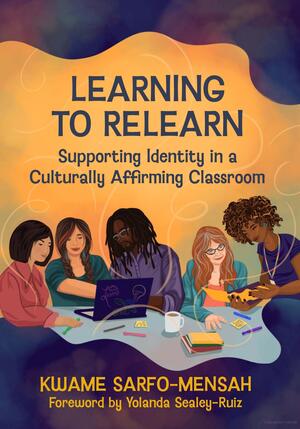
Learning to Relearn: Supporting Identity in a Culturally Affirming Classroom
Kwame Sarfo-Mensah
Available through the ATA library.
ILLUSTRATION BY MICHAEL PARILLAS