
ATA News
Education issues debated
Legislature highlights
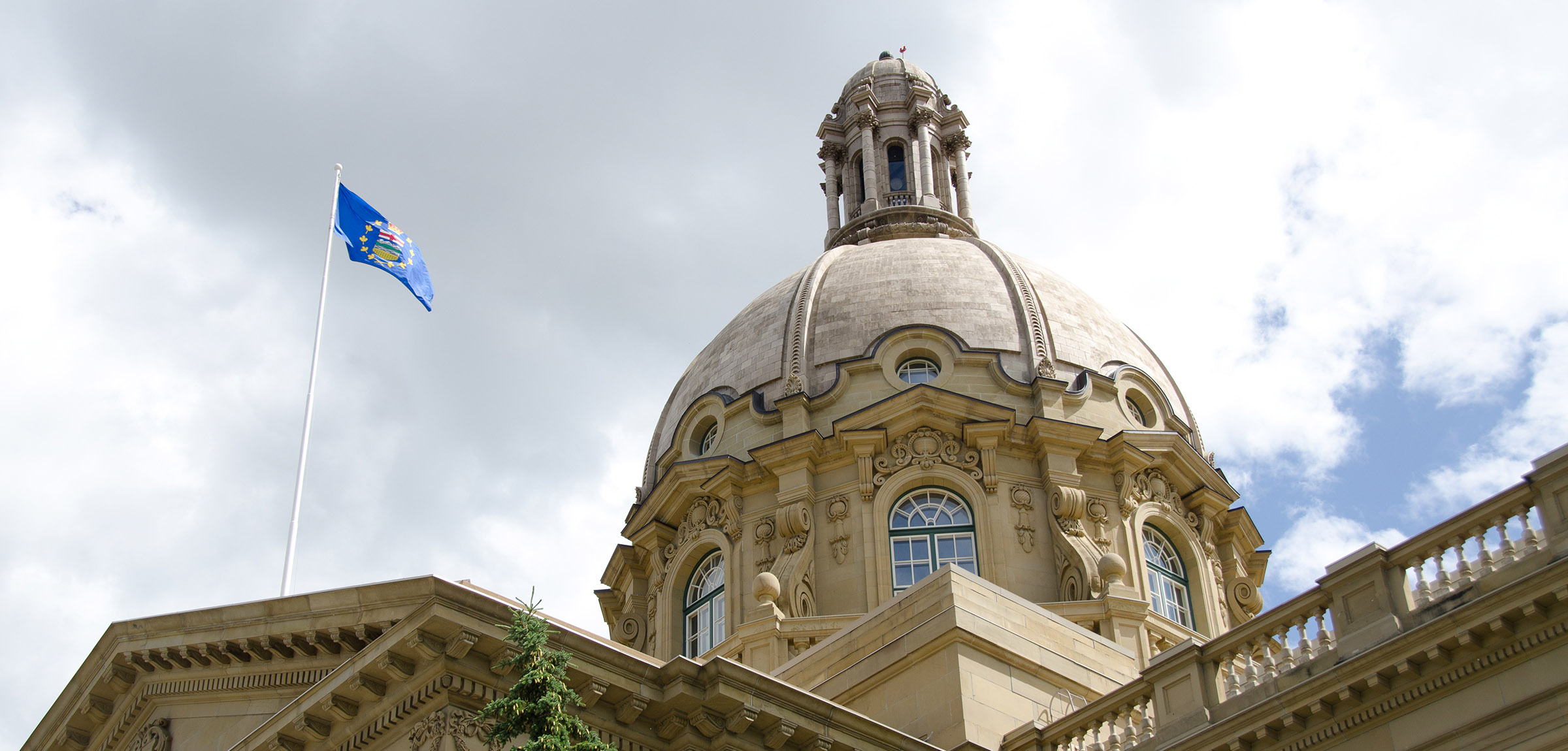
The spring sitting of the legislature began on February 24 and is scheduled to run until May 14. Here is a summary of the education-related discussions that took place in question period during the week of March 30.
Education Funding, March 30
Amanda Chapman (NDP MLA for Calgary-Beddington) pressed Minister of Education and Childcare Demetrios Nicolaides on Alberta’s per-student education funding, arguing the government is still below the national average despite increased spending and asking why schools are not being prioritized.
Nicolaides responded that Budget 2026 includes a $722 million increase in education funding, or seven per cent more than last year, and said Alberta is now above British Columbia in per-student funding. He also pointed to $8.6 billion that was allotted for school construction and modernization.
Chapman then challenged the government’s spending priorities, asking how many classroom complexity teams could have been funded with the $49 million spent on the controversial children’s pain medication contract tied to Sam Mraiche.
Nicolaides defended the government’s rollout of 476 classroom complexity teams, funded through more than $143 million, saying the teams are being sent to the highest-need classrooms to provide targeted student supports.
Chapman countered that 476 teams is far too few given the scale of classroom complexity in Alberta and then criticized the lack of support for Grades 7 to 12, saying the government was shortchanging students.
Nicolaides closed by contrasting what he called Chapman’s “rhetoric” with the government’s investments, again citing the complexity teams, school capital spending and the seven per cent education funding increase.
Bill 25, An Act to Remove Politics and Ideology from Classrooms and Amend the Education Act, 2026, April 1
Leader of the Alberta New Democratic Party Naheed Nenshi challenged Premier Danielle Smith on the government’s priorities in education, arguing that instead of addressing real problems in schools, Bill 25 focuses on symbolic and ideological issues, such as school naming.
Smith replied that the bill’s main purpose is to improve school safety, saying the government wants to give principals, superintendents and trustees stronger authority to deal with students whose violent behaviour puts teachers and other students at risk. She said students must be able to “earn” their way into and out of classrooms.
Nenshi then argued the government was using Bill 25 to strip inclusive language from the Education Act, pointing to the removal of words such as welcoming and diversity, and questioning for which students the government wanted schools to be less welcoming.
Smith responded that the issue is “violent kids,” not inclusion, and cited classroom violence experienced by teachers. She referenced comments by Chapman about violence in schools and said the bill is meant to ensure teachers and principals have the authority to remove violent students from classrooms and get them appropriate help.
Nenshi then accused the government of using school safety as cover for a broader ideological agenda, including restricting which flags can be displayed in schools. He argued the bill is effectively about banning Pride flags and challenged the government to say so directly.
Smith did not directly answer that point, but instead criticized what she described as a lack of respect for provincial and national symbols among New Democrats. She defended the government’s emphasis on the Canadian and Alberta flags in schools and said students would sing the Canadian national anthem weekly.
Nenshi closed by noting the contradiction in Smith’s comments, pointing out that other flags are already displayed in the Legislature, just as they are in schools.
Bill 25, April 2
Nenshi accused Smith of using Bill 25 to censor classrooms by restricting discussion of current events, banning certain materials and symbols, and making it harder for teachers to address complex or historically clear issues such as genocide, slavery, residential schools and authoritarian regimes. He argued that the bill undermines critical thinking, amounts to censorship rather than “back to basics,” and raises serious concerns about how teachers are expected to remain “neutral” on issues of truth, justice and inclusion.
Smith rejected that characterization of Bill 2 and said the bill is about responding to parent concerns, restoring a focus on literacy, numeracy, coding and critical thinking, and addressing the issue of classroom violence that teachers raised through the complexity committee. She framed the government’s approach as promoting patriotism and order in schools, including displaying the Canadian and Alberta flags and singing the national anthem, and criticized what she described as ideological or identity-based politics in education.