ATA News
Change for Children
Canada-Honduras program aims to boost intercultural education
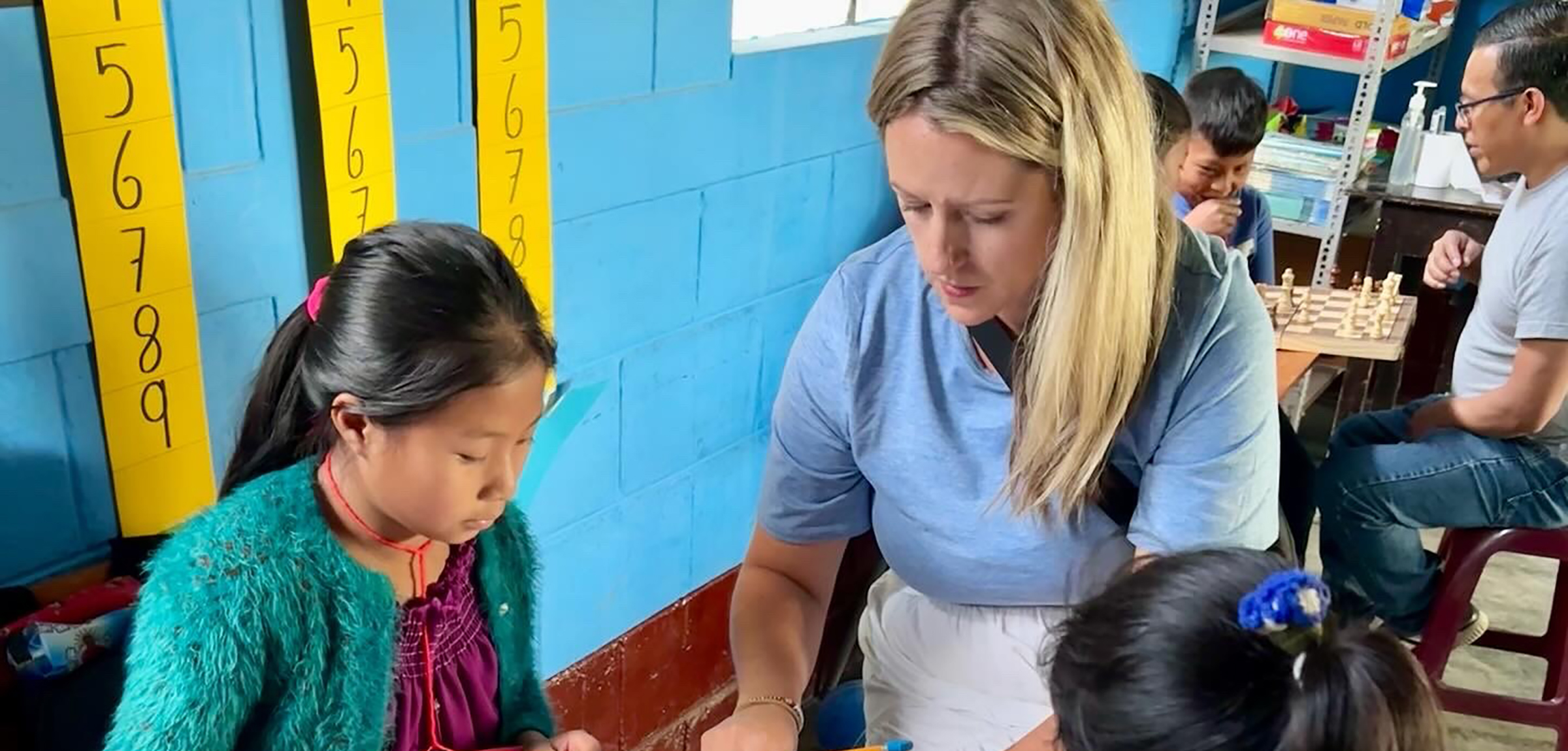
Change for Children is now recruiting teachers to join its July 2026 Teacher Brigade in rural Honduras, where participants will work together to strengthen classroom practice and expand opportunities for students in low-resource schools along Honduras’s Caribbean coast. The initiative, delivered in partnership with the Alberta Teachers’ Association as well as local Honduran education authorities and community leaders, brings teachers together for hands-on collaboration, peer learning and cultural exchange.
A central focus for the 2026 program is intercultural bilingual education (IBE), a model that supports children in learning in their first language while integrating local culture, identity and world view into daily lessons. Honduras is home to diverse Indigenous and Afro-descendant communities, including Garifuna, Lenca, Miskito, Maya Ch’ortí, Pech and Tawahka peoples, many of whom speak languages other than Spanish at home. Strengthening IBE helps ensure students receive instruction that honours who they are and how they learn.
Participating teachers will observe bilingual classrooms, exchange teaching techniques and cocreate resources that support early-reading skills, phonics, storytelling and culturally rooted learning. For many participants, the experience is transformative. Alexis Crich, a Grade 9 math and science teacher from Calgary, described last year’s program in Guatemala as a turning point in her career.
“I can’t begin to explain how much my experience with the ATA and Change for Children has impacted not only my teaching but also my entire world view on education,” Crich said.
During the trip, she was struck by the generosity of the communities and the enthusiasm of the students they worked with. Facing a language barrier herself—she was the only member of the team who didn’t speak Spanish—gave her a new appreciation for the challenges many English-language learners face at home.
“That perspective alone has changed the way I teach,” she reflected.
Digital learning is another key area of opportunity. Many schools lack reliable internet, so teachers use offline educational tools, such as RACHEL servers, which help bridge the digital divide. These tools allow students to access storybooks, science videos, Indigenous-language materials and other resources that enhance classroom learning.
Crich said the contrast between digital access in Canada and Guatemala shifted her perspective.
“Now, reflecting on this experience after the challenges we have faced in our classrooms recently, being asked to do more with less, I keep returning to what I witnessed in Guatemala,” she said. “Some teachers we met had only the most basic supplies and virtually no technology beyond the 15 Chromebooks provided by Change for Children. Yet they showed such resilience, creativity and dedication.”
The 2026 program will build on the momentum of previous years. By working side by side, educators from Honduras and Canada will strengthen classroom instruction, expand digital access and elevate the role of cultural identity in education.
As education systems worldwide grapple with widening inequalities, the Change for Children program highlights the importance of partnerships rooted in respect, reciprocity and community leadership.
Change for Children is now accepting teacher applications for the summer of 2026. Information is available at https://abteach.cc/changeforchildren. The application deadline is January 18.