ATA News
Teaching Together
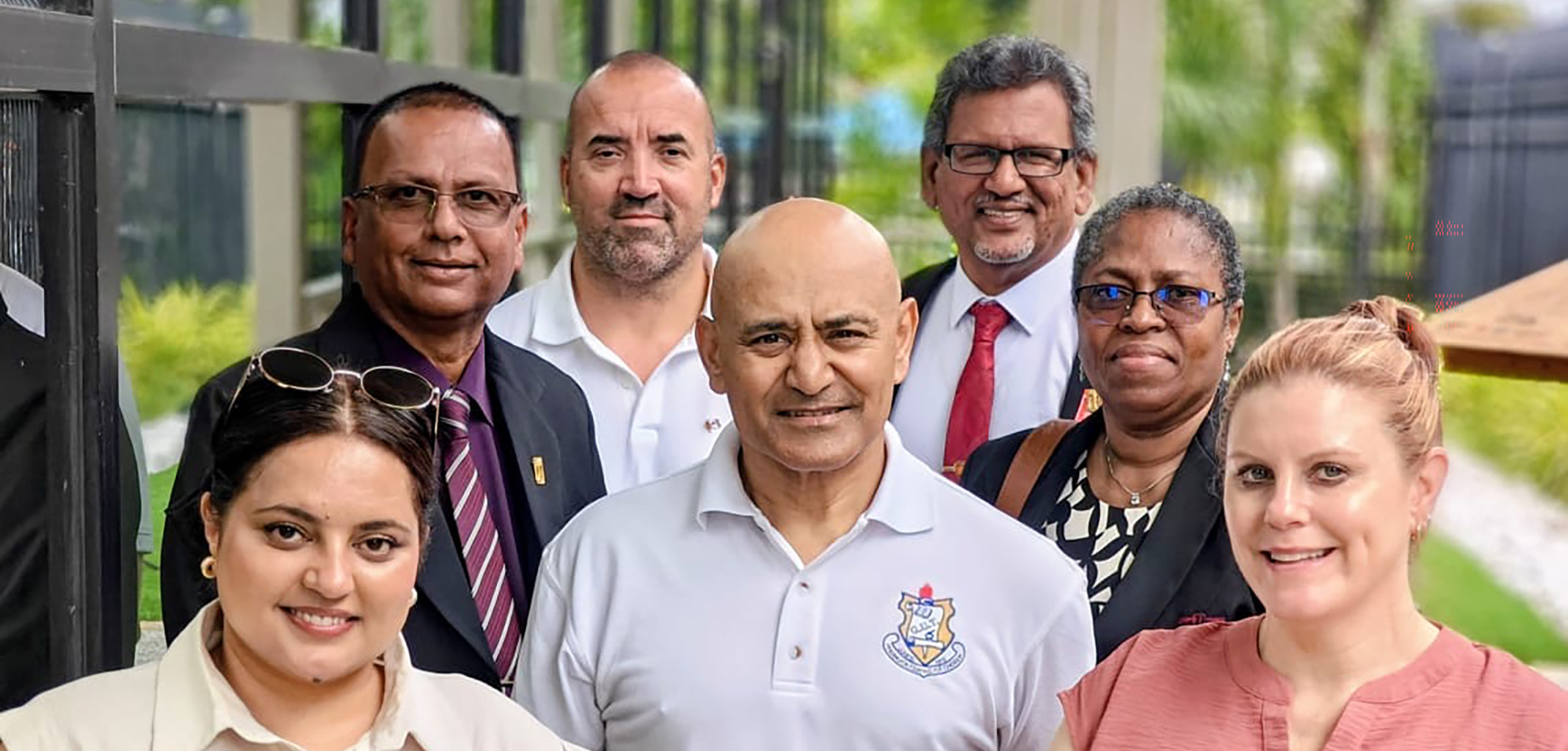
This past summer, Alberta teachers participated in the Teaching Together program, a joint endeavour of the Canadian Teachers’ Federation (CTF/FCE), its provincial and territorial member organizations and partner organizations in developing countries. The Canadian participants had the opportunity to travel abroad to coplan and codeliver professional development workshops for local teachers, aiming to promote equitable, high-quality, publicly funded education for all.
Alberta’s participants share their Teaching Together experiences here.
Trinidad and Tobago
Monique Wilson
This past July, teachers from across Canada travelled to low- and middle-income countries in Africa and the Caribbean to work with local teachers on topics as varied as literacy, numeracy, peace education, unionism, wellness, artificial intelligence (AI) and fine arts.
My team, two teachers from the Toronto area and two teachers from Edmonton, went to Couva, Trinidad. The international program has not been held in Trinidad and Tobago since 2015, so my team was very honoured to assist with getting the program up and running again. In comparison to the previous projects in which I have participated, Trinidad is well developed and the education system is robust.
In Trinidad and Tobago, teachers attended sessions on universal design for learning, differentiated instruction, creating emotionally safe classrooms and AI use, all under the main theme of responsive teaching. We had many excellent discussions, especially around the ethics and use of AI, which was by far the most popular session. Teachers shared their experiences with each other, and we were reminded that teaching is a profession that brings us all together.
Every local teacher was warm and welcoming. Participants and cofacilitators brought us gifts of fresh mangos, avocados and dragon fruit. The course director set up a meeting with Canada’s high commissioner in Trinidad and Tobago. We were also so honoured to be invited to an evening event attended by teachers from all over the Caribbean, including the executive of the Caribbean Union of Teachers.
Despite the differences in our geography, union status, and teaching and working conditions, we were reminded that there are more similarities than differences among us.
Nathan Howat
I had read about others’ experiences in the Teaching Together (formerly Project Overseas) program in the ATA News, and it was always something I thought I would like to try. Last fall, I decided to start the application process and was thrilled to be accepted and assigned to the program’s Trinidad and Tobago team.
The adventure began in January with monthly online meetings with my team, as well as all the other Teaching Together teams assigned to different countries. In July, we met in Ottawa for a three-day orientation and then the teams were off to their destinations. My team of four Canadian teachers landed in Trinidad and was met by hosts from the Trinidad and Tobago Teachers’ Association, who drove us to the town of Couva.
Over the following two weeks, we met our cofacilitators and worked together in a reciprocal cultural exchange, developing and presenting professional development sessions for dozens of teachers from across the country. The topics included differentiated instruction, developing safe classrooms and artificial intelligence in education.
Our daily routine consisted of breakfast with the team, then walking to one of the local secondary schools, where learning and laughter continued throughout the day. The local participants were eager to learn, and the Canadian teachers learned a great deal as well.
The experience was both enriching and fulfilling, and it reinforced to me that teachers face similar challenges no matter where we are from, and that, all over the world, kids are kids.
I take with me friendships and memories that will last a lifetime, and I look forward to my next opportunity to be a member of the Teaching Together team.
Antigua and Barbuda
Michelle Dickie
This summer, I was honoured to contribute to a new partnership between the Canadian Teachers’ Federation (CTF/FCE) and the Antigua and Barbuda Union of Teachers (A&BUT). As the first team to visit this beautiful island through the Teaching Together program, we had an experience full of incredible joy, meaningful new friendships, cultural exchange and valuable professional growth for all.
The Teaching Together program was one of the initiatives supporting the A&BUT’s 100th anniversary celebrations. As part of the program, their local union identified professional learning needs and selected topics including technology, reflective practice and higher order thinking. Our team supported the initiative by sharing perspectives, strategies, research and classroom experiences while also learning from the knowledge and experiences of our Antiguan colleagues.
This project exemplified the broader philosophy of Teaching Together: teachers learn best from other teachers. All the professional development was coplanned and cofacilitated, creating opportunities for genuine exchange rather than the export of one country’s educational practices to another. Our program focused on strengthening teaching and learning while also building teacher and union capacity and promoting equity and inclusion.
The partnership also recognized that our education systems may differ, but teachers often share common goals and challenges. Through dialogue, collaboration and cultural exchange, the participants developed new perspectives that will hopefully influence their (and our) practice long after this summer.
Ultimately, Teaching Together 2026 was about more than professional development. It was also about building relationships, sharing expertise, strengthening unions and creating lasting connections between educators in Canada and Antigua and Barbuda. It demonstrated the power of teacher-to-teacher collaboration and that when teachers learn together, students, schools, unions and communities all benefit.
It was a privilege to represent Canadian teachers this summer and to be part of such a meaningful experience.
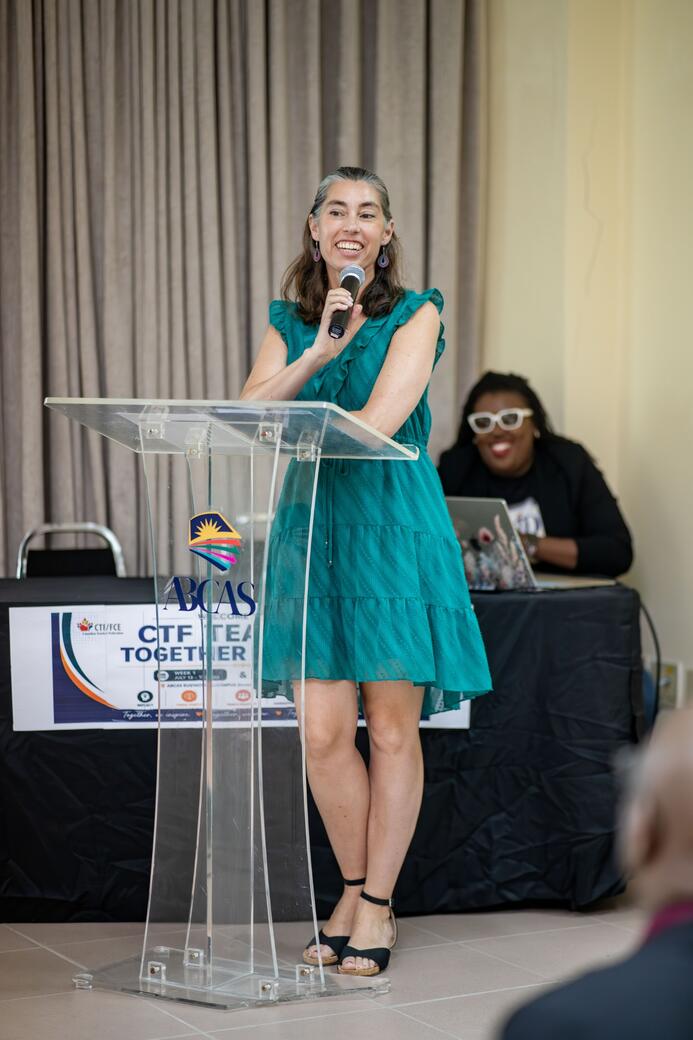
Michelle Dickie thanking the primary teachers in Antigua and Barbuda
Erinn Esau
For two weeks this July, I had the opportunity to take part in the Teaching Together program in Antigua and Barbuda. Working alongside members of the Antigua and Barbuda Union of Teachers, our Canadian team cofacilitated professional learning grounded in collaboration, conversation and learning from one another.
Antiguan educators brought their own knowledge and experiences to each session, sharing stories about their classrooms, students, successes and challenges. Strategies and ideas were discussed, questioned and adapted, with everyone bringing something to the conversation. I valued the opportunity to hear different perspectives and consider teaching and learning through another lens. Some of the most valuable parts of the experience came from the relationships that developed. Conversations with teachers, collaboration among facilitators, and opportunities to experience Antigua with the people who call it home highlighted how much teachers share across different contexts.
My Teaching Together experience also reinforced for me the importance of listening first. Effective facilitation is not about arriving with answers or deciding what others need. It is about creating space for teachers to share their expertise, learn from one another, and adapt ideas to their own classrooms and communities. I returned to Canada with new perspectives on teaching, professional learning and collaboration. More importantly, the experience reinforced the value of bringing educators together, creating space for genuine conversation and being open to learning from one another.
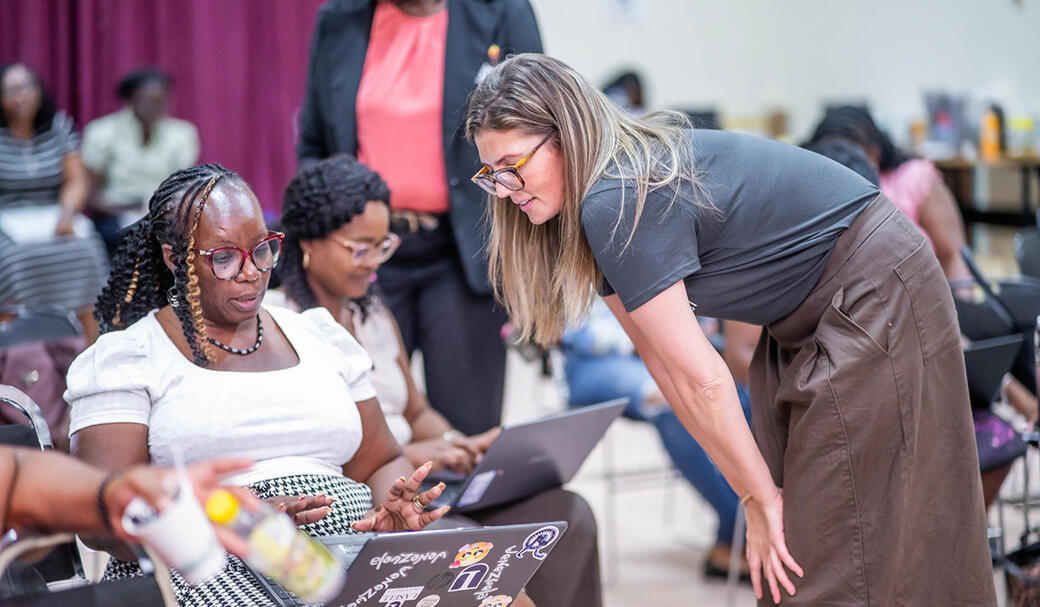
Participants in Antigua and Barbuda discussed and exchanged ideas during a professional learning activity.
Ghana
Symonds Botchey
What a summer! I am incredibly grateful to the Alberta Teachers’ Association (ATA), the Canadian Teachers’ Federation (CTF/FCE) and the Ghana National Association of Teachers (GNAT) for making the Teaching Together experience possible. Travelling to Ghana with six other Canadian teachers gave me the opportunity to collaborate with Ghanaian educators, participate in professional development, and learn from a different educational system and culture.
One of the most meaningful aspects of the experience was discovering the longstanding partnership between CTF/FCE and GNAT—more than 60 years. The program demonstrated the power of educators building relationships across countries and learning from one another. Each Canadian participant was partnered with a Ghanaian facilitator, whose knowledge of the local culture, education system and community realities was invaluable.
For me, the experience was especially personal. I was born in Ghana and attended school there before moving to Canada approximately 30 years ago. Returning to Ghana as a Canadian educator was an unexpected and deeply meaningful gift. I wondered how I would be received and sometimes describe my identity as being like a “zebra”—having experienced both Ghanaian and Canadian cultures. Those concerns quickly disappeared. I felt welcomed and at home, while also gaining the unique opportunity to see Ghana through both the eyes of the child I once was and the Canadian educator I have become.
During the program, we delivered professional development workshops to hundreds of Ghanaian teachers. My assigned topic was gender equity and culture. Working alongside both Ghanaian and Canadian facilitators reinforced that Teaching Together was not simply about Canadians sharing information with Ghanaian teachers. It was a genuine partnership in which everyone contributed experiences, perspectives and ideas.
Visiting Ghanaian schools was another highlight. I was deeply impressed by teachers’ creativity, dedication and resourcefulness. They created meaningful learning experiences despite having fewer resources than many Canadian classrooms. These visits reminded me that effective teaching is ultimately about relationships, adaptability, creativity and commitment to students.
The cultural celebrations, conversations with Canadian and Ghanaian educators and daily team debriefs further enhanced the experience. I also encountered difficult conversations about issues such as teenage pregnancy, which reminded me that teachers often support students through challenges that extend far beyond academics.
I returned to Canada with a deeper appreciation for my Ghanaian roots, a renewed respect for educators and a stronger belief in collaboration. Most importantly, Teaching Together reminded me not to take my resources, opportunities and support systems for granted. I hope to bring what I learned back to my classroom and colleagues and continue building relationships with educators both in Canada and around the world.
What a privilege, and an experience I will carry with me for a very long time.
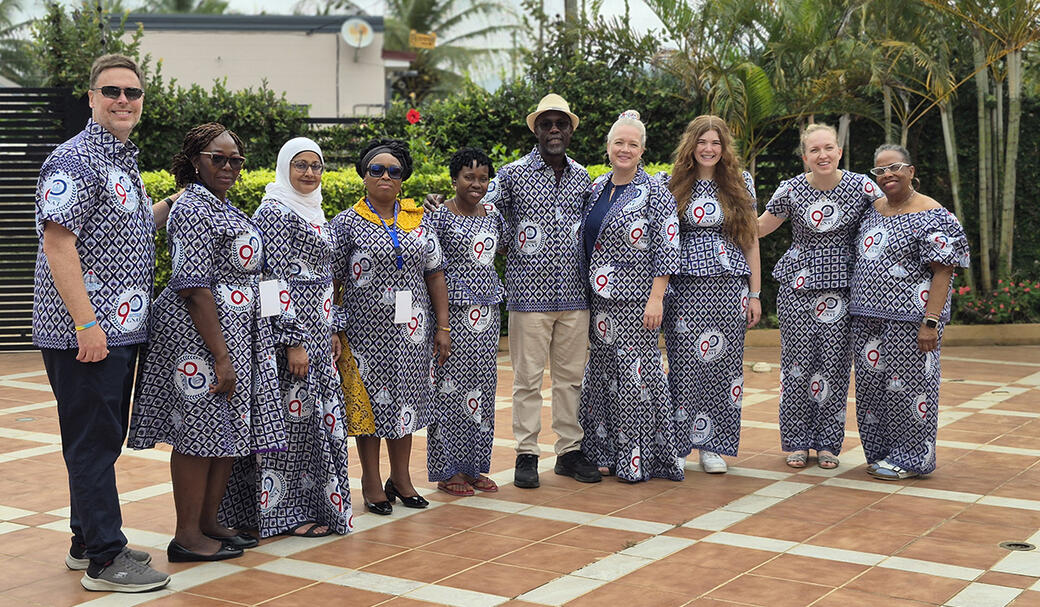
Canadian and Ghanian facilitators pose together.
Uroog Quraishi
As a first-time participant in the Teaching Together program, I had the incredible opportunity to work alongside the beautiful, kind and generous people of Ghana. This experience allowed me to step outside of my own educational context and immerse myself in a culture filled with warmth, hospitality, and a strong commitment to learning and community.
We spent our time in the city of Kibi, working at Kibi College with over 500 teachers from various regions. Our main discussion focused on gender and culture, a powerful and meaningful subject that generated thoughtful conversations, passionate exchanges and a high level of engagement among the educators. It was inspiring to witness the dedication these teachers demonstrated toward advancing opportunities for women and girls in Ghana. Their willingness to openly discuss challenges, share their experiences and explore ways to create positive change highlighted the important role educators play in shaping not only their classrooms, but their communities as well.
While I travelled to Ghana with the intention of sharing my own knowledge and experiences, I quickly realized how much I would learn in return. Being immersed in Ghanaian culture and experiencing their way of life gave me a deeper appreciation for the different perspectives, traditions and experiences that influence education. At the same time, I was grateful for the opportunity to share insights into the education system in Alberta and Canada, creating meaningful dialogue about both the similarities and differences between our educational contexts.
One of the most powerful aspects of this experience was seeing educators come together with a shared purpose. Despite differences in geography, culture and educational systems, we were united by a common commitment to our students and to creating a better future through education.
Teaching Together truly demonstrated the power of one union bringing teachers together from different regions, learning from one another and building connections that extend far beyond the classroom.
Togo
Elodie D. Nana
My experience with the Teaching Together program in Lomé, Togo was much more than a professional exchange.
We spent two weeks in Togo, where I had the opportunity to work alongside Togolese educators and engage in meaningful conversations about teaching, classroom management, inclusive education, differentiated instruction in large classroom settings and universal design for learning. We explored ways to support students with diverse learning needs and discussed how teachers can adapt their approaches so that every student feels valued and included, regardless of the size of the classroom. I was able to share some of the strategies we use in Alberta while at the same time learning from the approaches and practices of Togolese teachers.
One of the most inspiring aspects of my experience in Togo was the incredible sense of cohesion and solidarity among the teachers. Despite working with limited resources and often having only the most basic materials available, they have a remarkable ability to create a warm, joyful and welcoming atmosphere through music, singing and dancing. These activities seemed to help them momentarily set aside the limitations they face and focus on what they can create together. They reminded me that a positive and enriching educational environment does not always depend on having abundant resources. It can also be created through strong relationships, creativity, resilience and a collective spirit.
The cultural exchange was equally powerful. Sharing meals, conversations and everyday experiences allowed us to discover one another beyond our professional roles. I was especially touched by the warmth, generosity and hospitality we received. These moments reminded me that meaningful international collaboration begins with relationships, mutual respect and a genuine willingness to learn from one another with humility.
The experience also challenged me personally and professionally. Presenting and communicating with educators in a different cultural and educational context strengthened my confidence as a teacher, administrator and presenter. It taught me to listen more intentionally, ask thoughtful questions and remain open to perspectives and approaches that may differ from my own.
I returned to Canada with ideas to share and a deeper appreciation for the importance of global educational partnerships. Teaching Together reminded me that although our classrooms, resources and educational contexts may look very different, our purpose remains the same: to give students the best possible opportunities to learn, grow and succeed.
This experience strengthened my belief that when teachers learn from one another across borders, everyone benefits, most importantly, our students.
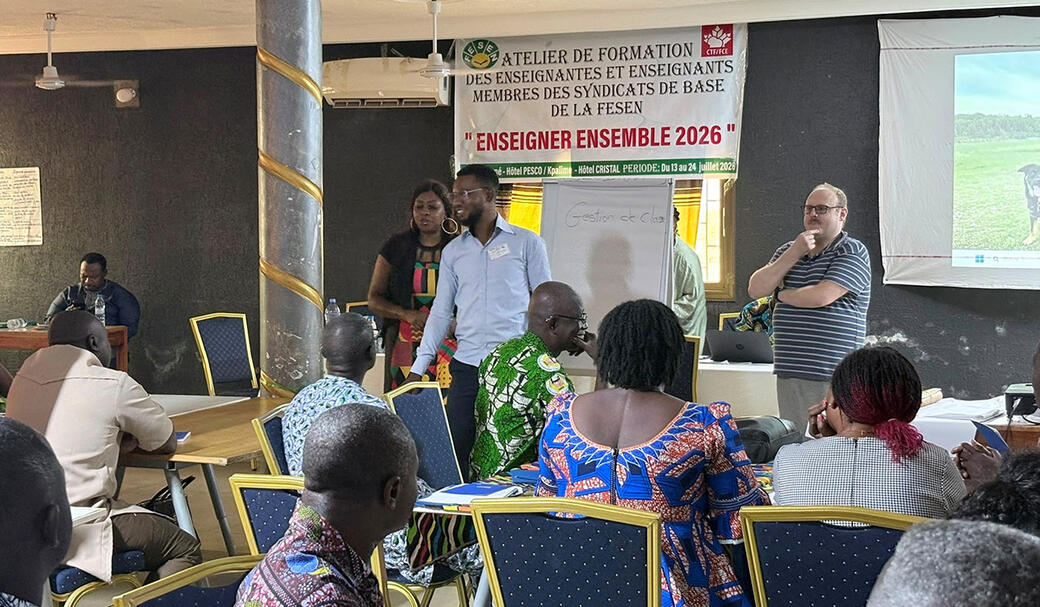
In Togo, the program included a classroom management workshop.
Nevis
Tamara Franko
This summer, I had the privilege of participating in the Teaching Together project in Nevis. Our work focused on differentiation and inclusion, but the experience became about much more than the professional learning we had planned.
Working alongside educators in Nevis expanded my understanding of the possibilities of connection, community and education. It reminded me that teaching and learning can look very different from one place to another and still be really good. Sometimes stepping outside of what is familiar allows us to see our own practice differently and to recognize that there are many ways to create meaningful learning experiences for students.
The educators and people I met in Nevis reinforced for me the importance of meeting students where they are. They demonstrated the powerful role that relationships with families, homes and communities play in a child’s education. Those connections extend far beyond a particular lesson, classroom or school year. They shape how students experience school and can influence them for years to come.
I returned to Canada with new ideas, but also with a renewed appreciation for some of the things that good educators seem to understand no matter where in the world they teach: relationships matter, belonging matters, and students learn best when we recognize and build upon the strengths they already bring with them.
I am incredibly grateful to the ATA and the Canadian Teachers’ Federation for the professionalism, care and work that make opportunities like Teaching Together possible. Experiences like this bring renewed excitement to my career and remind me that, despite the distance between our classrooms, the world of education becomes remarkably small when educators come together around good teaching practice and a shared commitment to students.
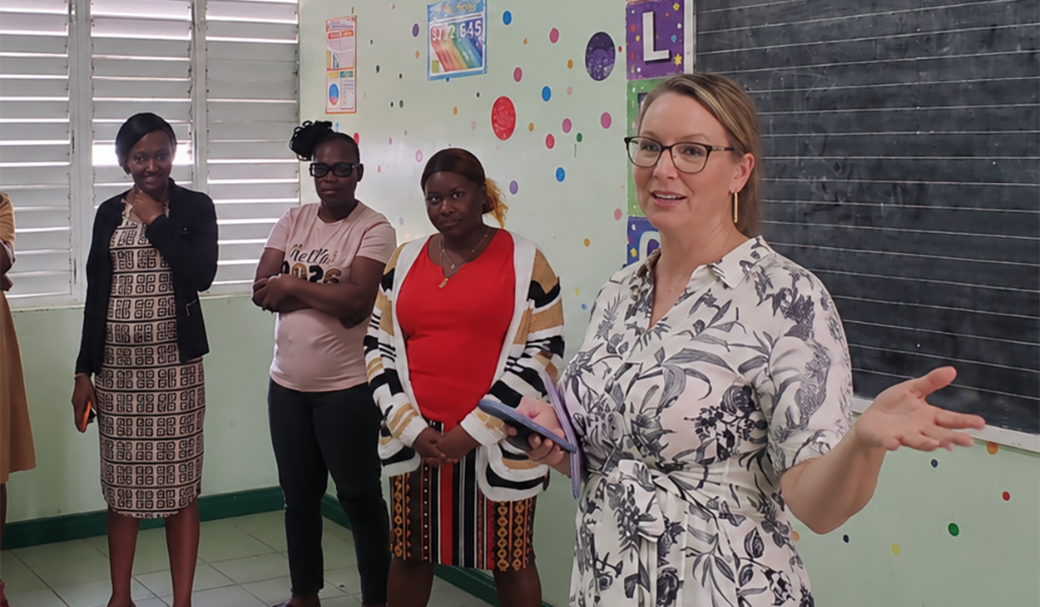
Participants in Nevis explored differentiation and inclusion.
Join the journey
Interested in participating in the Teaching Together program?
Learn more at abteach.cc/international-coop and submit your application by October 30.