Creating space for Indigenous education
Michelle Ranger helped create a space where students’ Indigenous identity is embraced and celebrated. This is the space Michelle Ranger helped create

Not all classroom tools need to be high tech

Quick! What technologies do you use to engage your students? Are you thinking about high-tech digital tools and software, or did some “old school” analog devices (whiteboards, thermometers and film cameras) come to mind?
Technology isn’t only about computerized or mechanical gizmos. From its etymological roots, tékhnē and lógos, technology can be defined more broadly as the “craft of making reason.” Through this lens, educational technologies include a wide array of materials that students can use to understand curricular concepts and the larger world, even natural materials like rocks and sticks.
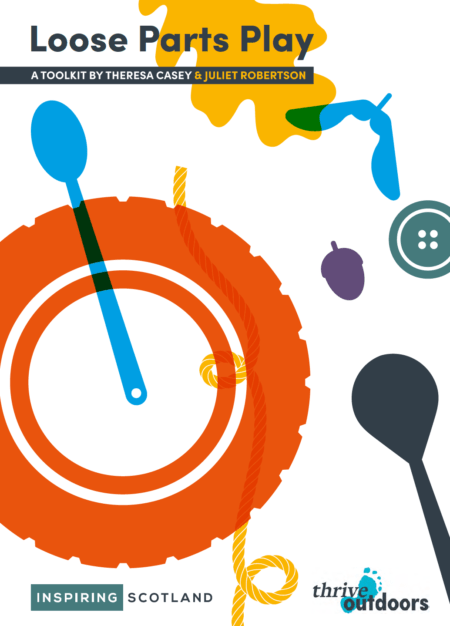
“Loose parts” is a term coined by architect Simon Nicholson in 1971 to describe found objects and materials that children can gather, organize, stack, combine and repurpose in infinite ways. Unlike purpose-built educational technologies or toys, loose parts don’t come with sets of directions or assembly instructions. They afford imaginative play, on-the-spot engineering and almost unlimited creativity and learning. The same sticks, rope and scraps of fabric can be assembled into a sailboat, a castle, a treasure chest, a superhero costume, a kite and more!
In addition to creativity, research suggests that the use of loose parts can promote the development of problem solving, critical thinking and communication skills. Not only can loose parts be used during unstructured play, they can also be used in activities to explore curricular learning outcomes in multiple subjects at various grade levels.
Here are just a few ideas:



Michelle Ranger helped create a space where students’ Indigenous identity is embraced and celebrated. This is the space Michelle Ranger helped create

Education workers are paying a heavy emotional price, research finds

Editors' notebook
View the entire digital issue of the ATA Magazine
See the latest issue