ATA Magazine
A bot for every occasion
Technology
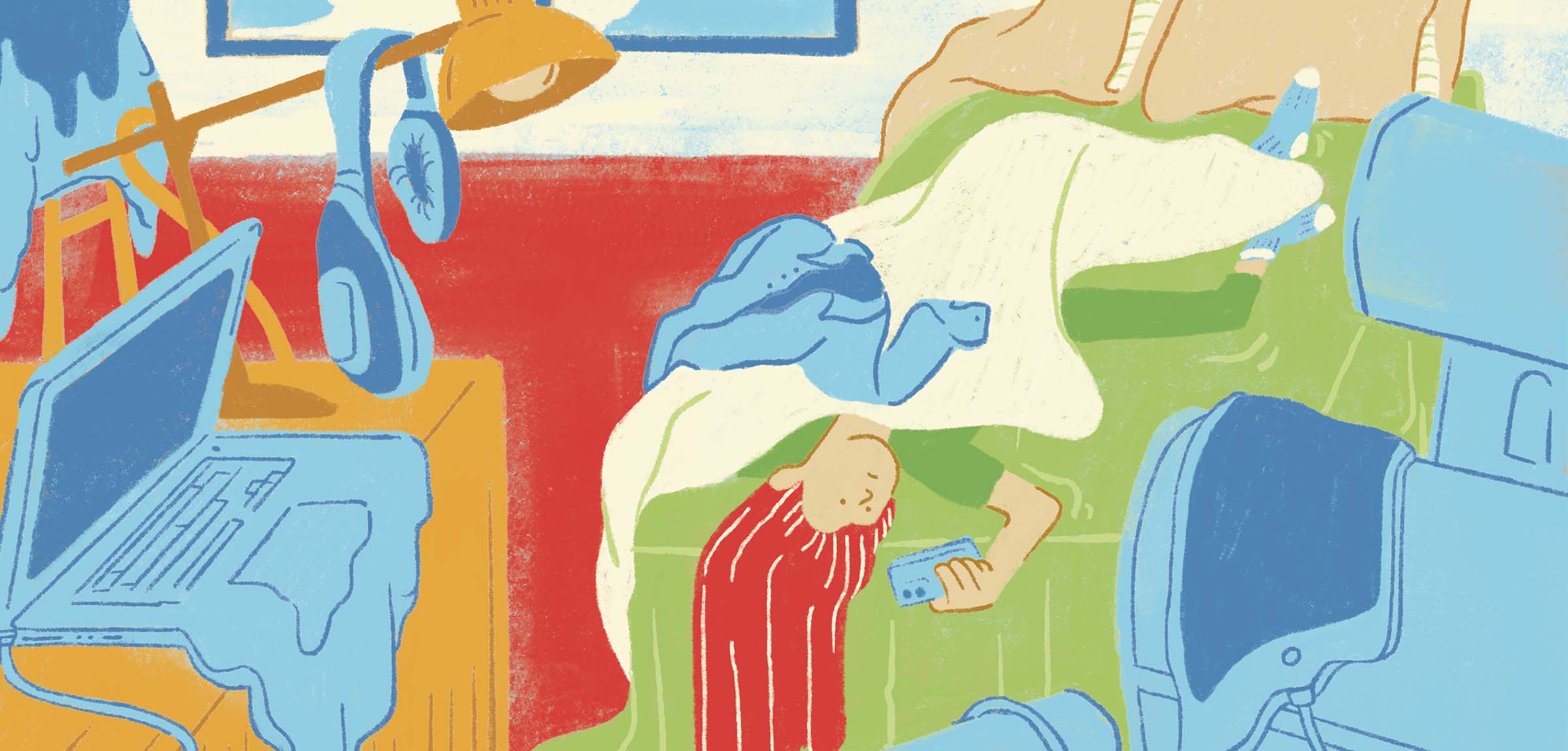 Illustration by Michael Parillas
Navigating the tension between AI power and human warmth
It was about a year ago that I caved.
Up until then, I’d avoided any use of AI. Then I heard about Perplexity and was curious.
I found the online portal and typed into the “ask anything” window a question that summarized the aim of a personal research project I’d been working on for two months. I hit “submit.” Four seconds later I was staring at a succinct paragraph that summarized what I’d learned on my own, supplemented by a series of tangential entries—all footnoted. Following these breadcrumbs, I saw that the machine had probed every website and discussion group that had taken me weeks to mine using traditional web searching.
In that moment, I was dumbfounded by the might of AI-powered research, and in the months that followed, I became increasingly comfortable with this technology.
Recently, I was applying the final human touches to a Perplexity-aided document when I thought of a new element to include. My immediate next thought was, “I need to see what Perplexity thinks.”
That reaction made me pause. “Am I losing the ability to think and decide for myself?” I wondered.
This phenomenon is known as cognitive atrophy, which has long been one of the concerns associated with AI use. Ever since I experienced this introspective moment, I’ve been extra mindful to use my preferred AI tool as a resource while retaining my human agency. Still, I can’t imagine going back to the old way of researching information.
Young people at risk?
The story arc that I’ve lived with Perplexity bears similarities to a phenomenon among young people that has prompted warnings from many experts and researchers: overreliance on AI companions, which are language-model platforms that enable users to create and interact with AI-driven personas.
In April 2026, researchers from the University of Pennsylvania published the results of a study in which they analyzed Reddit posts by teens aged 13 to 17 who used Character.AI.
The researchers found that teens “often begin using chatbots for support or creative play, but these activities can deepen into strong attachments marked by conflict, withdrawal, tolerance, relapse, and mood regulation.” They identified emotional dynamics they felt were unique to teen overreliance on AI companions, such as intense attachment and simulated intimacy.
“I needed someone to talk to, but I didn’t have the courage to open up to anyone in my life,” posted one teen cited by the study.
In the posts the researchers analyzed, many teens shared about the emotional difficulty they experienced when trying to quit using their AI companion.
“I try to quit, but I feel empty. I like talking to bots more than real people now,” posted one teen.
“Even though I deleted it, I still think about my characters every day. I feel like I abandoned them,” posted another.
Researchers found that new, real-life interactions like spending time with friends, going back to school, starting a job or entering a relationship were often a key factor among teens who were able to move away from their AI companion, as these interactions quelled the urge to use the app.
A role for teachers
Dr. Anabel Quan-Haase, a professor of Information and Media Studies and Sociology at the University of Western Ontario who researches AI bots, says teachers can play an important role in helping young people understand that a bot is driven by an algorithm and is not like a real friend.
“Teachers have a great opportunity here to have a lot of these important discussions and maybe to even try out the chat bots and discuss in class openly what are the benefits, what are the limitations, what are considerations—ethical, confidential, transparency, accountability—around these systems,” says Quan-Haase.
Alberta teachers have been leading advocates in calling for boundaries around the use of AI technology in educational settings. Learn more with Research Insights on page 32.