
ATA News
One last history lesson: Hope lies in public education
Q&A
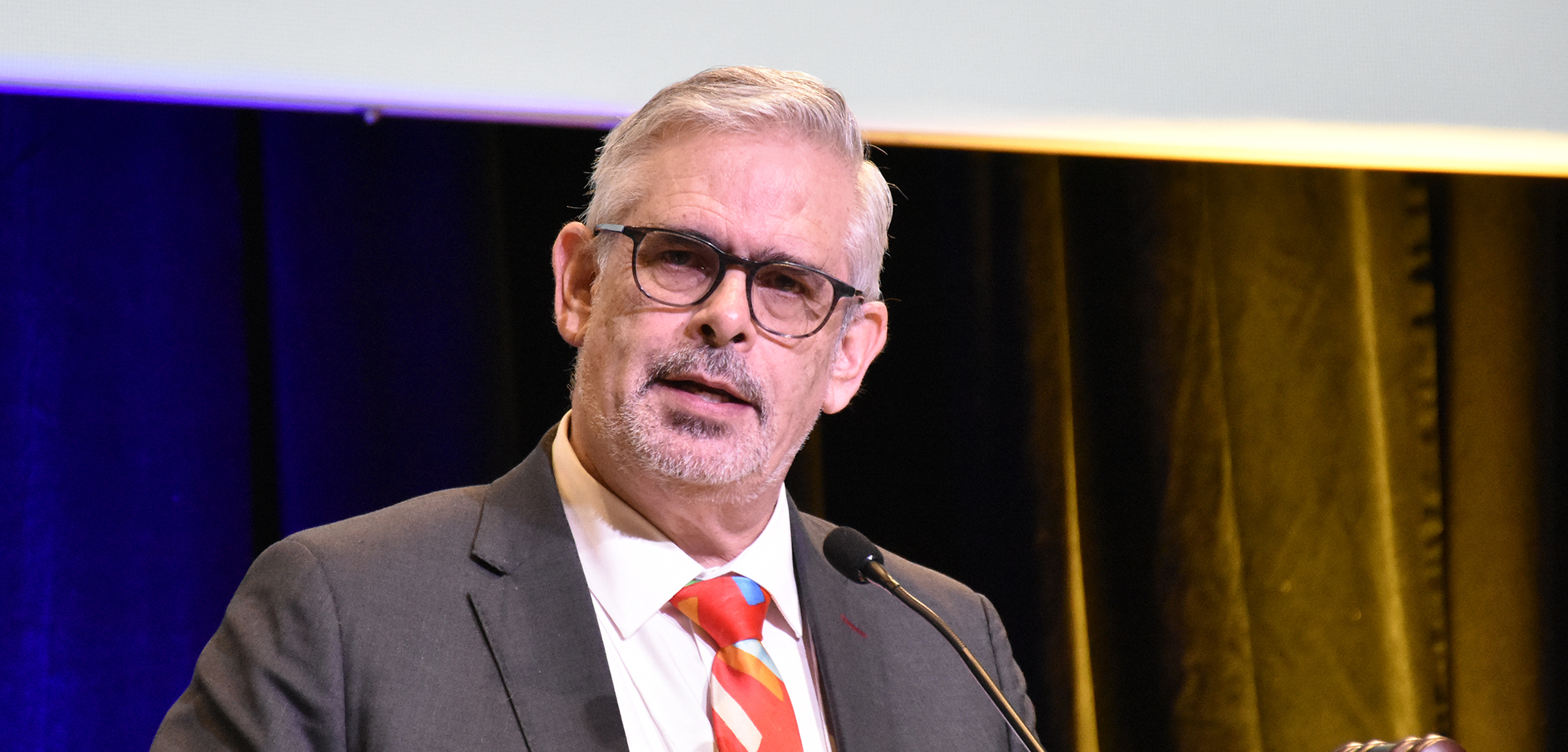
Question: Now that you are heading out to pasture, what are your thoughts on what the future looks like for education?
Answer: “It was the best of times, it was the worst of times…” The opening paragraph of Charles Dickens’ A Tale of Two Cities sums up my conflicted view of our current reality and cautions us against thinking that we are living in some unique historical moment. My instinct is to try to identify a precedent for the challenges now facing us and our education system and then to ask what we might learn from that. Among a range of possibilities, I would suggest that the 16th-century Protestant Reformation and the ensuing Thirty Years War that engulfed western Europe in the 17th century offers a somewhat concerning parallel to our broader situation.
While I’m not going to attempt a Coles Notes (remember those?) summary of the period, I will note the key similarities with our own time, starting with the emergence of a disruptive technology. By the time that Martin Luther was posting his 95 Theses, the technology of printing with movable type on paper had been around for only 50 years. It is difficult to capture fully the impact of printing on the advancement of human history, but the parallel in our time is the emergence of the internet and, more recently, artificial intelligence. The effect of both has been to rapidly increase the speed, volume and spread of information, good and bad, with implications that we do not yet fully understand.
Five hundred years ago, printing enabled the rapid dissemination of the Protestant challenge to the religious and political orthodoxy which consequently created a crisis of epistemology that undermined the shared understanding of the nature of knowledge and how people knew things to be true. One could no longer count on the Catholic Church to be the accepted source of truth, and so the social consensus based around that belief began to fall apart. Today, we see a proliferation of ideologies and media sources, each promoting its own version of truth. Furthermore, there seems to be no agreed way of resolving resulting epistemological or practical differences or, frankly, there is little interest in doing so. Instead, there appears to be growing division and a loss of community.
In 17th-century Europe, ruling elites in church and state exploited this crisis and these divisions to advance their own interests. The result was political, religious and geographic fragmentation that gave rise to the Thirty Years War and an unprecedented and unmatched level of violence across central Europe (estimated deaths amounted to between 4.5 and 8 million, proportionally higher than those resulting from the Napoleonic or World Wars). Although I do not believe that the political conflicts being exacerbated by technology and ideological division today will result in anything remotely similar, the current social order is fragile. There is an increasing potential for episodic violence.
In this rather dismal scenario, public education and the role played by teachers offer rare hope. Education, to draw from Jacques Delors’ model as set out in Learning: The Treasure Within, is about four things: learning to know, learning to do, learning to live together and with others, and learning to be. Of these, the latter two, often ignored by government and economic interests, are crucially important for creating a society that can put diversity at the forefront and help individuals achieve their full potential while being true to themselves. Our public schools, however imperfect, are the last great integrated and integrating institutions in our society that have this mission and the capacity to deliver on all those critical social goods. The challenge for teachers, their Association and the greater society will be to preserve public education in the face of those who would seek to devalue it and substitute it with segregated, private alternatives. Within public education, the challenge will be to preserve teacher professionalism and the capacity to deliver a learning experience that prepares students’ minds and hearts to flourish in conditions of uncertainty. This is no small task, but I have confidence in you, and in the many friends of public education, to achieve it. However, these efforts will not be without struggle.
Since joining the Association in 2001, my career has been tied to the ATA News, writing content, providing direction, authoring editorials and, finally, answering readers’ questions in this column. This will be my last routine appearance in these pages, and I want to take the opportunity to thank all the members of staff (particularly the long-suffering editors) who assisted me and whose work over many years has produced this unique publication for members and a larger audience. I also want to thank you for reading my work and that of many others appearing in these pages—your support has been invaluable.
Best wishes to you all and to this Association, which I have had the pleasure to serve. Now, which way is the pasture?

Dennis Theobald
ATA executive secretary